Lorenzo Maria Pacini
February 28, 2026 marks a watershed moment in the strategic history of Western Asia.
Summary of the first days of the conflict
February 28, 2026 marks a watershed moment in the strategic history of Western Asia. On that date, the United States, in operational coordination with Israel, launched a large-scale military offensive against the Islamic Republic of Iran, striking the top of its political and military leadership, sensitive infrastructure related to missile and nuclear programs, and command structures deemed essential to its response capabilities. The event represents not only a military escalation, but the concrete manifestation of a theoretical and practical contrast between two models of regional order: hegemony and deterrence.
Hegemony is based on the overwhelming superiority of an actor capable of imposing its political and strategic will without encountering resistance capable of inflicting equivalent costs; it presupposes asymmetry and the ability to preemptively neutralize any challenge. Deterrence, on the other hand, is based on a balance of mutual threats: it does not eliminate potential conflict, but freezes it through the credibility of retaliation.
The February 28 attack was conceived as an attempt to reaffirm a hegemonic principle, demonstrating that Western technological and operational superiority could disrupt the Iranian decision-making system before it was able to react effectively. but Tehran's almost immediate response called this premise into question, suggesting that Iranian deterrence had not been neutralized but only prompted to activate.
The initial operation, called "Roaring Lion" by Israel and "Epic Fury" by Washington, unfolded through an air campaign of extraordinary scale, with hundreds of aircraft engaged in coordinated raids supported by naval assets deployed in the Arabian Sea. The doctrine applied followed the "decapitation" model: strike at the head of the system to paralyze the body. Within a few hours, the nerve centers of Iranian power in Tehran were targeted, including institutional residences, Supreme National Security Council facilities, and underground command networks. The elimination of Ayatollah Ali Khamenei, announced by Iranian state media the following day, together with the deaths of senior officers of the armed forces and the Revolutionary Guard, was intended to create a decision-making vacuum and a shock effect that would prevent a coordinated response. At the same time, installations in Isfahan, Karaj, and Qom, considered crucial for uranium enrichment and ballistic missile storage, were bombed. Air defense systems were targeted to "blind" Iran's multi-layered shield, while Israeli military sources reported that approximately 500 targets were hit in the first 24 hours. However, the operation also caused serious civilian casualties, including the destruction of a school in Minab, an event that deeply affected Iranian public opinion, transforming the strategic confrontation into a collective trauma and strengthening internal cohesion around the need for a response.
That response came with a speed that surprised many observers: less than an hour after the bombing began, the Islamic Revolutionary Guard Corps announced Operation True Promise 4, marking a qualitative leap in the confrontation: for the first time, the entire network of U.S. military bases in Western Asia was formally declared part of the battlefield. Ballistic missiles and drones struck the Fifth Fleet headquarters in Bahrain, the Al-Udeid base in Qatar, and facilities in the United Arab Emirates, Kuwait, Jordan, and the Iraqi Kurdistan region. Tehran has made clear a legal-strategic principle: U.S. bases, regardless of their geographical location, are extensions of U.S. sovereignty and therefore legitimate targets in the event of aggression. At the same time, hundreds of missiles were launched towards Israeli territory, with alarm sirens sounding in Jerusalem, Tel Aviv, and Haifa and impacts recorded on military installations and sensitive infrastructure. In a matter of hours, the perception of invulnerability that had accompanied both U.S. bases and Israel for decades was shattered, altering the psychological and strategic climate of the entire region.
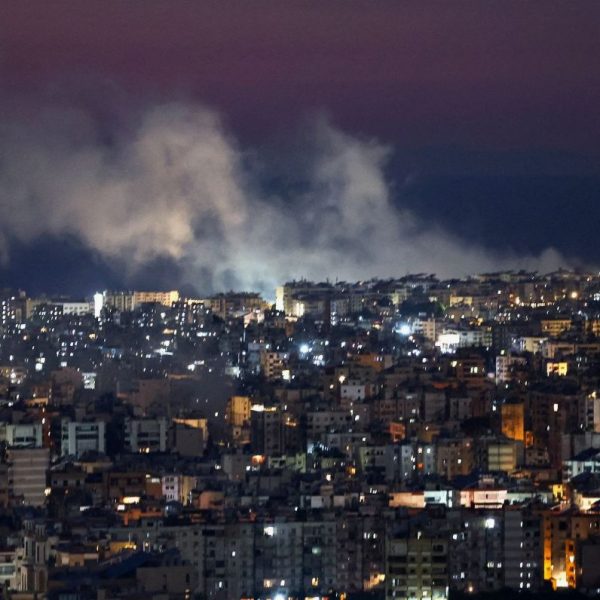
Hezbollah's direct entry from the southern front of Lebanon further expanded the conflict. Coordinated rocket and drone attacks opened a second theater of operations, forcing Israel to spread its defensive resources across multiple fronts. Israeli bombing of southern Lebanon and the southern outskirts of Beirut transformed the crisis into a multi-level confrontation, putting into operation the doctrine of "Unity of the Fronts" supported by the Axis of Resistance. In this context, the conflict ceased to be a bilateral confrontation between Washington and Tehran and took the form of a regional war with variable geometry, with fault lines extending from the Persian Gulf to the eastern Mediterranean.
The political and strategic factors
On the political level, the U.S. leadership justified the operation as a necessary step to definitively eliminate the Iranian nuclear threat. President Donald Trump explicitly linked the action to the goal of regime change, calling on Iranian forces to lay down their arms and promising immunity in the event of surrender. Prime Minister Benjamin Netanyahu called the attack a historic opportunity to redraw Western Asia, presenting it as a preventive act aimed at ensuring the long-term security of the Jewish state. Tehran, for its part, declared the era of "strategic patience" over, announcing the closure of the Strait of Hormuz to international shipping and striking maritime targets in the Gulf. The impact on energy markets was immediate: oil prices skyrocketed, while shipping companies suspended or diverted numerous trade routes.
What is happening is part of Trump's strategy and the MAGA motto, because the advent of a 'new America' involves doing what has not been done before, as Trump has reiterated, namely returning to attacking the world, laying waste to regions of interest to the U.S., and seeking to forcefully counter anything that opposes the dollar and its hegemony.
At this point, the conflict faces several possible trajectories. The first is that of a total regional war: in such a scenario, Iran could turn the threat to Hormuz into a prolonged blockade, using naval mines, anti-ship missiles, and asymmetric tactics to permanently disrupt the global energy flow. Israel would face simultaneous pressure from Lebanon, Syria, Iraq, and Yemen, while U.S. bases would become constant targets of intermittent attacks. Such an escalation would test Washington's logistical and political capacity to sustain a conflict on multiple fronts, with increasing economic and military costs. In this context, the regional architecture built over the past decades around Israeli military superiority and the advanced U.S. presence could suffer structural erosion, accelerating the transition to a multipolar order.
A second trajectory envisages a deterrent rebalancing after the initial shock. If both sides were to assess the costs of further escalation as excessive, an undeclared truce could emerge, based on a new awareness of each other's limitations. The United States and Israel would claim the slowdown of Iran's nuclear program as a strategic success, while Tehran would consider its ability to directly strike Israeli bases and territory as proof of the end of Western immunity. This would result in a phase of low-intensity conflict, characterized by cyber operations, clandestine actions, and calibrated missile exchanges, in an unstable but contained balance.
A third scenario is that of a prolonged war of attrition. Instead of seeking a decisive confrontation, Iran and its allies could opt for a gradual erosion of the U.S. presence, progressively increasing costs without offering a pretext for a devastating response. Intermittent attacks, economic pressure, and targeted destabilization could, over time, undermine the political and financial sustainability of the U.S. commitment in the region, but such a strategy would also entail heavy internal sacrifices, requiring economic resilience and social cohesion in conditions of reinforced sanctions and isolation.
Finally, a decisive shock that forces one of the parties to quickly recalculate cannot be ruled out, namely a series of very strong, devastating attacks that could compromise the feasibility of a medium-term conflict for both sides. A devastating blow to U.S. naval infrastructure or an attack that seriously compromises Israeli defensive capabilities could generate internal pressure sufficient to force an immediate change in strategy. Similarly, a prolonged paralysis of the Iranian command system could pave the way for radical concessions. The speed and coordination of Tehran's initial response suggest that the adaptability of the Iranian system has been underestimated.
What is at stake goes beyond the outcome of individual military operations: the stability of about half the world, and perhaps more, is at stake. The outcome will determine not only the stability of Western Asia, but also the broader configuration of the international system for decades to come.