Why Washington Has No Intention of Ending Its Favorite Political Scam
November 17, 2026
The American people seem to take turns being played for chumps by our political parties. Their usefulness has long since expired, a fact so obvious that I am embarrassed to have to say it. Responsible Republicans have spent years waiting for their party to get the budget under control, address the mounting national debt, reduce the burden of the nanny state, and restore incentives for businesses to hire workers and become profitable without undue government interference or excessive taxation.
Sane Democrats, an increasingly rare breed, have been hoping that government would address gaps in health care, improve schools, and provide greater opportunities for the underprivileged. That is not to say Republicans don't share some of those goals. They simply believe that social justice is more likely to come from freedom and economic opportunity than from government intervention.
Despite what passes for political disagreement these days, I feel it is my duty to inform my Republican and Democratic friends, in case you haven't figured it out already, that you have been completely swindled. There are plenty of ways we have been swindled, but today I want to concentrate on one that is foremost on everyone's mind: inflation.
For sixty years or longer, we have operated under the mistaken assumption that inflation is a problem our political leaders want to solve. We even elect them on promises to do something about inflation, affordability, and the cost of living. We listen to their speeches, vote them into office, and patiently wait for prices to come down.
But we have been taken for schmucks. The causes of inflation are not some impenetrable mystery, and economists have long understood the tools that can help control it. Our politicians know that their preferred policies can make the problem worse, yet they pursue them anyway. Why ? Because Washington likes the freedom to spend, borrow, and promise things without presenting the bill. Inflation may not be the stated objective, but the arrangement that helps produce it serves their interests. Not ours. Theirs.
This is not a new idea. Murray Rothbard, the American economist, explained the shady little trick more than sixty years ago in his short tract What Has Government Done to Our Money? Good ol' Murray had their number. Here's how the scam works.
Governments like to spend money-lots of it. They want armies, government programs, foreign adventures, and even stupid things like LGBTQ+ Shakespeare plays in Guyana, or wherever the hell they hold them. All of this costs money. And when politicians fund these things, certain voter blocs and donors are pleased, which can be useful when reelection comes around. Since Congress has not seen fit to impose term limits on itself, the members get another chance to hang on to their phony-baloney jobs. Losing might mean having to find real work, which would be unfortunate.
But here's their dilemma: government brings in only so much revenue, and there are so many needs. Some senators and congressmen are particularly friendly with the military and the arms industry and are enthusiastic about military adventures. Wars, as you know, are expensive. And once Washington has paid for all the other things it wants, the money runs out rather quickly.
Then there are the other programs. Senator What's-His-Name wants to do a favor for an important donor or a bloc of voters. Very, very important to Senator What's-His-Name, and certainly important to the donor. But here's where it gets interesting: it may not be important to you or me. In fact, we might think the expenditure is wasteful, extravagant, or even offensive. Quite a few are.
So what to do ? It would be terribly inconvenient to ask the voters for a tax increase to pay for something they might not even want. They could get angry and conclude that Senator What's-His-Name is a crooked putz. The more attractive alternative is to bury the expenditure in the budget and borrow the money to pay for it. Hardly anyone notices, and the bill may not come due in a politically meaningful way for years. By then, our distinguished senator may have retired to a comfortable life of public service, speeches, and consulting fees.
Every now and then, a highbrow do-gooder arrives in Congress determined to reform the system. But these people tend to fizzle out, and their parties are rarely enthusiastic about supporting anyone who threatens the arrangement. That's not how things work on the Hill. Republicans get their wars, Democrats get their programs, and some politicians want both. Washington borrows, monetary and credit conditions may accommodate the spending, and everyone is happy. Everyone in Washington, that is. The public barely notices another trillion here or there, because no one sends it a separate tax bill. When prices rise, Republicans blame Democratic social programs and Democrats blame Republican wars and defense spending. And nothing changes.
Rothbard described inflation as a hidden tax. No one sends you a bill announcing that Congress has voted to reduce your purchasing power. You discover it at the grocery store, and when you complain, politicians point across the aisle. If that doesn't work, they can blame oil companies, corporate greed, foreigners, the Federal Reserve, or a convenient hurricane. Raise someone's taxes openly and he might get angry. But finance government through borrowing, encourage monetary expansion, and allow inflation to erode the value of savings, and the connection between political choices and the public's losses becomes much harder to see. Borrowing alone is not the same as printing money, but the political temptation to conceal the cost is much the same.
The modern version of this arrangement really got going under Ronald Reagan. He cut taxes, increased military spending, and hoped economic growth would make the numbers work. Deficits were also supposed to force Congress to become more disciplined. Right. Giving Congress access to unlimited borrowing and expecting fiscal discipline is like giving a chimpanzee your Visa card and hoping he'll develop an interest in household budgeting. Democrats have spent wastefully to stay in power. Republicans have done the same. Each party has plenty of reasons not to examine the other's record too closely, and the result is something resembling an unstated conspiracy of silence.
Enter Donald Trump. This is where Otter's line in Animal House becomes prophetic: "You fucked up. You trusted us." Trump entered national politics promising to run the country like a successful business. In 2016, he told Bob Woodward, among others, that he could eliminate the roughly $19 trillion national debt in eight years. After all, America had never enjoyed the services of a businessman and negotiator of his extraordinary talents. Just wait.
Trump won the presidency in 2016, in part because enough voters were unwilling to elect Lady Macbeth. I suspect nobody was more surprised than Trump himself. After some early missteps and cabinet reshuffles, he fell right into line with the rest of Washington. It was time to cut taxes without demanding corresponding spending reductions. Republicans controlled Congress when the 2017 tax law passed, yet the cuts were not matched by comparable spending restraint. The debt continued to accumulate, and tariffs eventually became another part of the fiscal sales pitch.
Pause for a moment and consider how much the national debt has grown since 2016. We had wild spending under Trump, extraordinary spending under Biden, and a pandemic that sent the whole business into overdrive. Even Nero would have had trouble keeping up. Now Trump tells us that tariffs will bring in enormous amounts of revenue, which could theoretically be used to reduce the debt. That sounds wonderful. There's just one problem. Nobody in Washington seems particularly interested in reducing the debt.
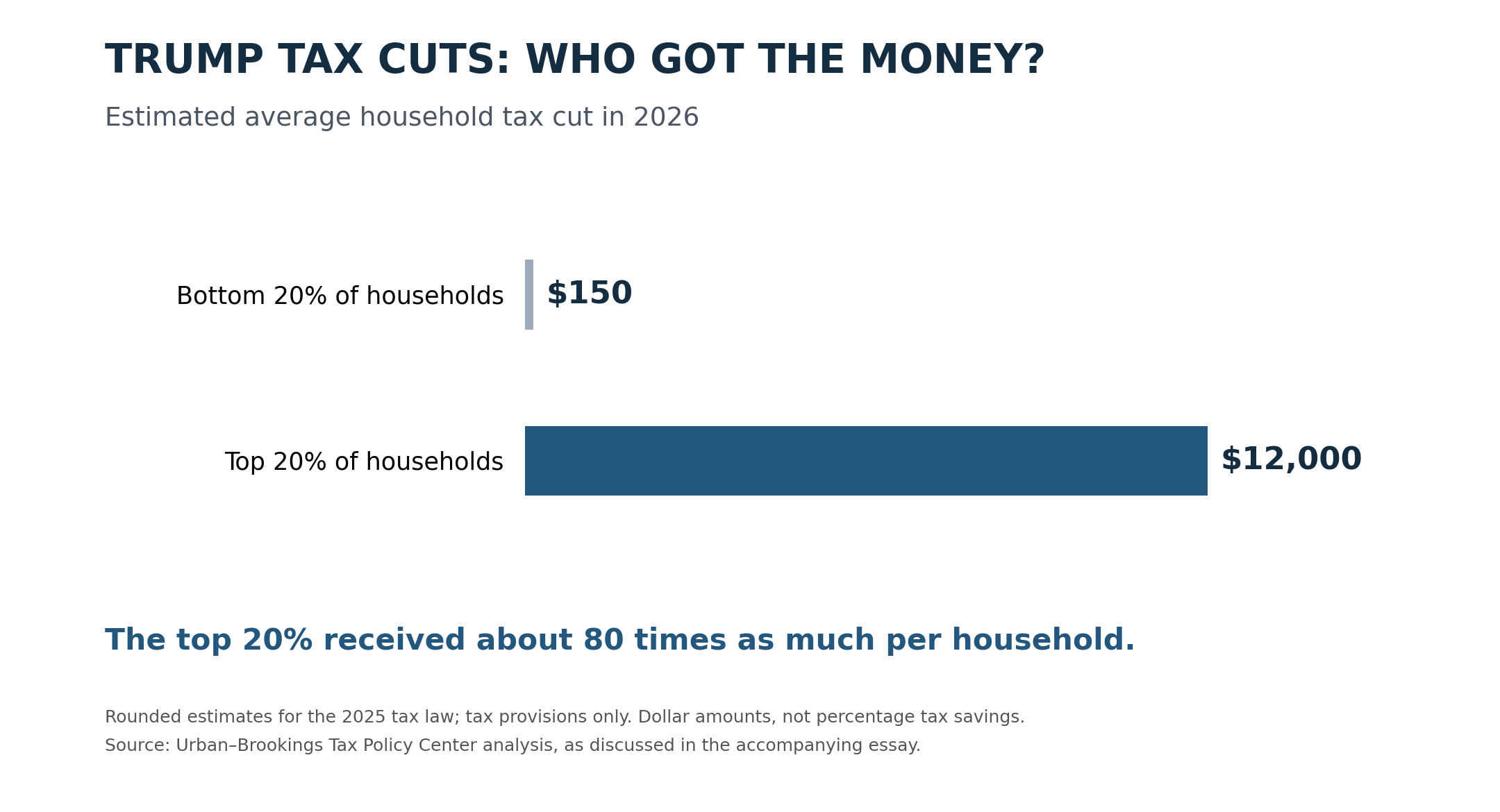
Here's how the trick works. Trump cuts taxes, which means the government collects less money than it otherwise would. And because he doesn't cut spending to make up the difference, the government has to borrow more. Now, as the accompanying graph shows, the wealthiest 20% of Americans received vastly larger tax cuts than the poorest 20%. I'm all for people keeping more of their own money, and perhaps some of that money will be invested in businesses and new jobs. But somebody still has to pay for the government's spending, and that somebody is the American taxpayer, including future generations.
Then come the tariffs. These are taxes on imported goods, paid initially by American importers, who pass some of the costs along to consumers through higher prices. The government collects additional revenue, which could help reduce the deficit and eventually the debt. But does Washington use this opportunity to get its spending under control ? Of course not. It keeps spending and borrowing, and the debt keeps growing. The tariffs simply provide another source of revenue to help keep the whole operation going.
Now consider what this means for the average working family. The wealthy receive the largest dollar benefits from the tax cuts, while working families receive considerably less. Then those same working families pay higher prices for goods affected by tariffs. And because the government continues borrowing, they and their children remain responsible for the growing debt. The poor suckers get stuck with the bill from more than one direction.
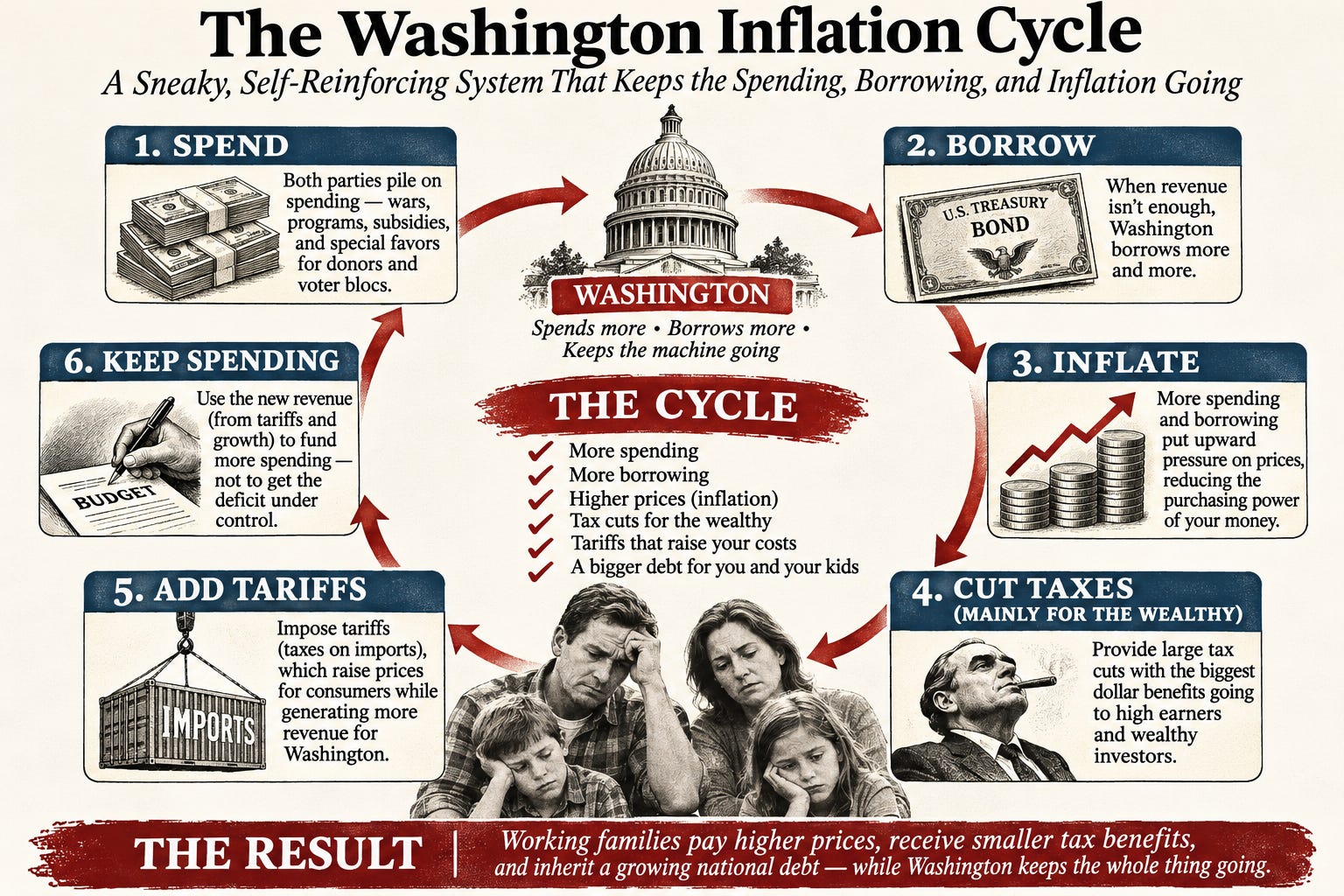
It's a beautiful arrangement, at least if you're a politician. Washington announces a tax cut and congratulates itself for putting money back into Americans' pockets. Then it quietly collects some of that money through tariffs, which show up in the prices people pay at the store. It's like a car salesman announcing a generous rebate and then adding the amount back into the financing contract. Only a car dealership could come up with a scheme like that. Or a real estate developer from Queens.
And here's the best part: The politician gets credit for cutting taxes, the government gets additional revenue, and nobody has to make the unpleasant decision to cut spending. The wealthy enjoy their substantial tax benefits, while ordinary Americans pay more for some of the things they buy and inherit a government that remains hopelessly in debt. Everybody in Washington gets what they want. The American taxpayer gets the monthly statement.
Which brings us to the Pentagon. President Eisenhower warned Americans about the dangers of the military-industrial complex, and his warning has aged rather well. We have spent trillions on military commitments, often after being assured that foreign populations would greet us as liberators. Oddly enough, we were not always as popular as our government expected when we arrived. And the financial costs were only part of the story.
Americans eventually elected a president who promised to put an end to endless wars. Yet military interventions and their costs have hardly disappeared. In the case of the conflict involving Iran, the questions are familiar: who authorized the commitment, what will it cost, and who will pay ? Borrowing can spare politicians the immediate unpleasantness of asking voters to finance military action through higher taxes. The costs are still real, even if the invoice is delayed. War does not automatically create sustained inflation, but it can create severe supply shocks.
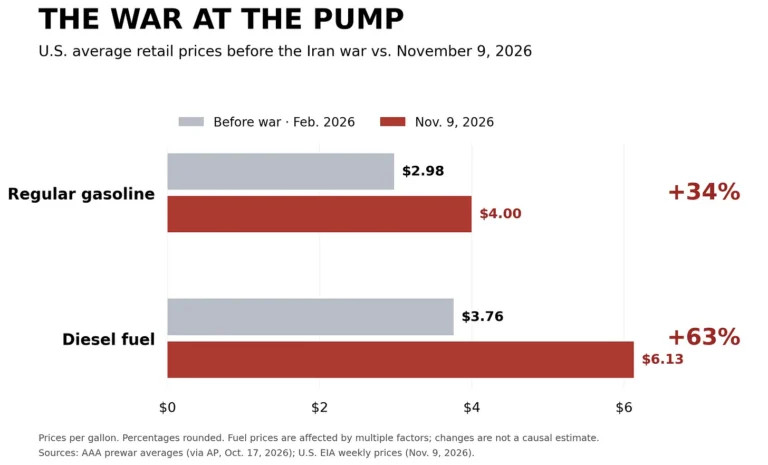
That is especially true when conflict disrupts oil supplies, shipping routes, and supply chains. Higher fuel and diesel prices work their way into trucking, food distribution, manufacturing, and nearly everything else that must be moved from one place to another. These risks are hardly obscure. The administration can argue that military objectives justify them, but it cannot credibly act as though the economic consequences were unimaginable. Once again, Washington makes a decision, and ordinary Americans are asked to absorb the cost. Our leaders sometimes behave as if the laws of economics and the forces of nature have granted them a special exemption. Put all of this together-tax cuts without sufficient spending restraint, tariffs that can raise consumer prices, expensive military commitments, and pressure for cheaper money-and it becomes difficult to pretend that the economic tradeoffs are a surprise.
Which brings us to the Federal Reserve, the president's favorite scapegoat. Trump wants lower interest rates. Of course he does. Cheap money is attractive to borrowers, investors, businesses, homeowners, and presidents who would rather not explain the cost of financing their ambitions. But lower rates can also stimulate borrowing and spending. When inflation is stubborn, monetary easing can make the central bank's job harder. Lower rates may be appropriate when growth weakens or inflation subsides; they are not an entitlement bestowed on a president because he finds high rates annoying.
Having supported policies that carry inflationary risks, Trump then attacked the Federal Reserve and its leadership for resisting his preferred interest-rate policy. That is a remarkable position from which to lecture anyone about economic discipline. His approach to the Fed is rather like demanding that the fire department extinguish a blaze while insisting on his constitutional right to continue pouring gasoline on the building. And when the firefighters complain, you accuse them of incompetence.
That brings us back to Murray Rothbard's disturbing warning. We have spent decades assuming that inflation is an unfortunate by-product of government mismanagement or unfortunate circumstances. Then we elect new politicians who promise to fix it. Then they arrive, as Trump did, and proceed to behave much as the people they replaced.
For Rothbard, this is not a recurring failure of leadership. It is far more sinister. It reflects a political system that rewards elected officials for providing immediate benefits while postponing or concealing the costs. Rothbard pointed out that the politician who cuts spending risks angering people who receive government benefits. The politician who raises taxes risks angering the people who are stuck with them. But the politician who borrows or supports monetary expansion can postpone the unpleasant reaction from voters.
There is therefore a reason why this arrangement survives elections, administrations and party control. It is as ineradicable as a cockroach. It is politically convenient. At some point, the distinction between an unintended consequence and deliberately accepted consequence becomes a bit fuzzy.
So here are some questions that we should ask President Trump, congressional Republicans and their Democratic counterparts. If you genuinely want to protect the purchasing power of the American dollar, what are you prepared to give up ? Which government program will you eliminate ? Which military commitment will you decline ? Which tariff will you abandon ? Will you accept fiscal discipline if it interferes with your political ambitions ? Because if the answer is that nothing can be sacrificed, that compromise is impossible, and that you cannot sublimate anything to your political ambitions, then you should simply admit that your real priority is doing whatever the hell you want.
And that brings us to the real problem Rothbard identified sixty years ago. The danger is not that governments occasionally make economic mistakes; those can be remedied. It is that political power creates a permanent temptation to obtain what it wants while obscuring the cost in both economic and human terms. And once a political class discovers that it can enjoy the benefits of what it wants today, while transferring the burden to those who cannot easily identify the source of their losses, it has very little incentive to abandon the arrangement voluntarily.
In the end, the greatest political trick of the modern age is not that Washington has learned how to spend money it doesn't have. That part is easy. It's that Washington has persuaded Americans to argue over who gets to spend it, instead of asking who is going to pay.
This article was originally published at Abstract Truth Substack.