May 14, 2026
In his latest interview with Glenn Diesen, Peter lays out a picture of an economy in which the post-war shock is only a temporary detour from a longer-running slide in the dollar. He ties energy prices, fiscal deficits, trade policy, and America's fading industrial base together into a single theme: a weaker dollar and the painful adjustments that follow. He also suggests where investors might look as the world reallocates purchasing power.
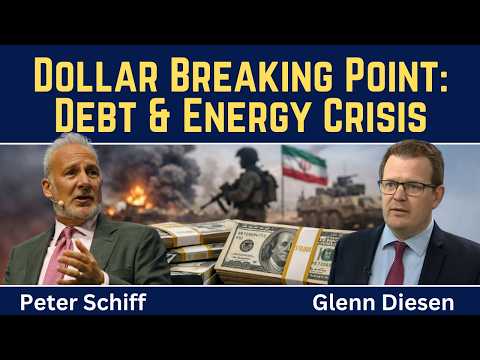
Peter opens by tempering expectations for oil's decline and pointing to a returning dollar weakness as a key upward pressure on energy prices:
So I don't think oil prices are going to come all the way back down to where they were, probably not even close to where they were. They could come off and they will come off from the highs. But I think there are other factors that are going to drive oil prices higher that have nothing to do with the war, particularly a weakening US dollar. And I think that the war interrupted the dollar weakness. And I think to the extent that the war ends, the dollar's weakness is going to resume.
He follows that by explaining why the dollar's slide is not just cyclical but structural, driven by fiscal choices that persist even if hostilities end:
But I think what's going to be weighing the dollar down is going to be the soaring deficits that are bigger because of the war. Even if it ends, we're still going to be spending more money replenishing all of the missiles and bombs that we used up, and now we have to replace them. So military spending is going to go up, but other spending is already going up, and interest spending is on autopilot now with higher rates. So our fiscal position is deteriorating, and there's no sign that we're going to do anything about it.
Peter shifts to a concrete example of how politics and regulation make markets worse, using the latest Spirit Airlines boondoggle to show how government intervention can block necessary consolidation and improvement:
I think it would have been a bad decision and it's something they shouldn't even think about. They should know without thinking that it's the wrong thing to do. But also it highlights the problems that government makes because Spirit Airlines, just a few years earlier, there was a buyout offer for two or three billion, I forget the amount, by JetBlue. JetBlue wanted to buy the airline and the Biden administration, really led by Elizabeth Warren, killed it. And ultimately the courts stepped in and said, no, it's bad for competition if these two airlines got together.
From there he broadens the critique to tariffs, arguing tariffs often do more harm than good for U.S. producers by raising costs and shielding inefficiency:
And in fact, in many cases the tariffs are counterproductive because they make US manufacturers that we still have less competitive because those manufacturers may depend on a lot of imported components. And now those components are more expensive because of the tariffs. And to the extent that the tariffs do protect some industries from competition, it allows those industries to be less efficient. And therefore they end up losing market share globally.
Finally, he offers a practical observation about foreign business: if the dollar falls and other currencies rise, companies outside the U.S. with global reach may be the beneficiaries of the new spending power:
There are businesses in Europe that I think represent good investment value and that have markets that go beyond Europe and that are positioned to satisfy customer demand in emerging markets where I expect demand to explode. I think when the dollar crashes, these other currencies are going to rise and America's purchasing power is going to be transferred abroad. And so that's going to open up new markets and new consumers and companies that are positioned to take advantage of that will do very well.
This article was originally published on SchiffGold.com.