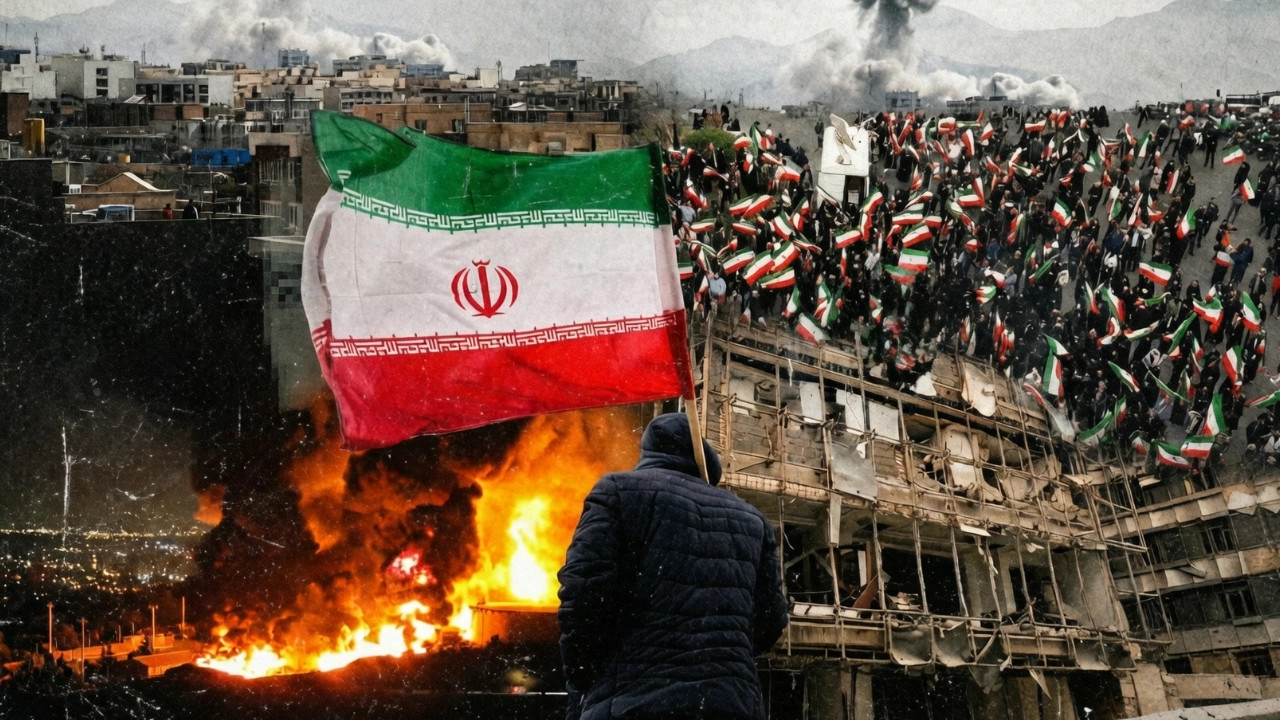
The United States and Israel are systematically targeting hospitals in Iran. In one month of bombing, the two countries have hit at least 307 health centers across the country, according to reports from the Iranian Red Crescent.
The carefully planned destruction of the Islamic Republic's medical infrastructure fits into a long history of deliberate U.S. attacks on hospitals. Since the end of World War Two, Washington has targeted medical centers in at least 16 countries, and the 307 Iranian sites hit does not even come close to the record for the number of hospitals in any country destroyed by American bombs and missiles.
Iranian Destruction
There was no warning. U.S. and Israeli airstrikes hit Gandhi Hotel Hospital in northern Tehran on March 1, and again on March 2. Locals were fasting for Ramadan as missiles tore into the building, shattering glass and wrecking its neo-natal unit and ICU.
Completed in 2009 and described as "beacon" of Iranian medicine and one of the most advanced medical centers in West Asia, the 17-storey building was among the country's most important hospitals. Images of the aftermath show a once proud building in ruins, with floor after floor devastated.
Gandhi Hotel Hospital is one of more than 300 medical centers that have been hit by U.S. and Israeli strikes. Nine days afterward, on March 11, the Persian Gulf Martyrs Educational and Medical Center in Bushehr on Iran's southern coast was targeted and severely damaged.
Missile explosions destroyed much of the hospital's medical equipment. Even as the glass was still falling, authorities made the decision to rush patients to the nearby Nuclear Scientists Martyrs Hospital, despite the fear of a double-tap strike, like the ones often seen in Israeli attacks on Palestine.
On March 21, the Imam Ali Hospital in Andimeshk, Khuzestan Province, was targeted. Video footage from the aftermath of the attack shows wards, waiting rooms, and corridors completely devastated, with both walls and roofs collapsing under the strain of U.S./Israeli bombardment.
The Imam Ali is Andimeshk's only hospital, and patients were forced to be bussed to healthcare facilities in other cities, according to Hossein Kermanpour, head of public relations for the Iranian Ministry of Health. I wish [Donald Trump and Benjamin Netanyahu] understood that this is a crime against humanity," he said.
Other medical infrastructure, including a first responders' center, an Iranian Red Crescent office, and the Pasteur Institute, a medical research laboratory, have also been hit.
"What message does attacking hospitals, pharmaceutical companies and the Pasteur Institute as a medical research center in Iran convey?" asked Iranian president Masoud Pezeshkian; "As a specialist physician, I urge WHO, the Red Cross, Doctors Without Borders and physicians worldwide to respond to this crime against humanity."
The attacks have been largely ignored by Western media. Few newspapers or TV news reports have even mentioned the damage to the country's healthcare system, let alone centered it as a major news story.
The U.S.' Long History of Bombing Hospitals
President Trump has a history of targeting medical facilities. Last year, U.S. forces carried out 14 separate airstrikes on the Al Rasool Al-Azam Oncology Hospital in Saada, Yemen, the centerpiece of the country's healthcare network.
For a full investigation into the attack, and the U.S.' long history of targeting civilian medical infrastructure around the world, see the MintPress News report: "With Yemen Attack, U.S. Continues Long History of Deliberately Bombing Hospitals."
Repeated attacks against hospitals is more of a pattern than an aberration for Trump. In 2017, the U.S. carried out 20 strikes against a hospital in Raqqa, Syria, using white phosphorous munitions to do so, killing at least 30 civilians in the process.
Trump's predecessor, Barack Obama, was not less fond of targeting healthcare facilities. In 2015, his administration ordered a bombing campaign against a Doctors Without Borders hospital in Kunduz, Afghanistan. The building was one of the largest and most recognizable in the city, and an internal inquiry found that the airmen aboard the gunship pushed back against the order, citing its illegality. They were overruled and forced to carry out the strike, killing at least 42 people.
Obama's attack on Doctors Without Borders marked the only time in history that one Nobel Peace Prize winner has attacked another one.
During his time in office, Obama bombed seven countries, including Libya, where U.S. planes struck a hospital in Zliten, leveling it completely. At least 11 people were killed in the operation.
Perhaps no nation on Earth has felt the impact of American power in the 21st century as badly as Iraq. Successive administrations attacked critical infrastructure there, including in 2003, when President Bush bombed the Red Crescent Maternity Hospital in Baghdad. While many were killed in the strike, the real death toll, as UNICEF noted, was far higher, as with no medical care, maternal mortality spiked after the attack.
The 1990s is often remembered in the West as a time of peace. Yet President Clinton used the period to target medical infrastructure in three separate countries. In Yugoslavia, U.S. planes bombed a number of hospitals, including dropping now-banned cluster munitions on a facility in Niš, killing at least 15 people.
In Somalia in 1993, U.S. soldiers carried out a mortar attack against the Digfer Hospital in Mogadishu, destroying the building's main reception area. They then proceeded to bomb the journalists attempting to cover the incident.
Meanwhile, in Sudan, Clinton ordered a hit on the Al-Shifa medicine factory in Sudan. Fourteen cruise missiles pounded the plant, turning what had been the largest producer of medicine in the country into a pile of twisted metal. The German Ambassador to Sudan estimated that, without the antibiotics, antimalarials, and other drugs it produced, the true death toll of the strike was in the "tens of thousands." Few Americans know about this incident.
The 1980s were a dangerous time to be a doctor in a country designated for regime change. The U.S. invaded Grenada in 1983, in order to put an end to the socialist revolution on the Caribbean island. In the process, it bombed the Richmond Hill Mental Hospital, killing dozens.
In El Salvador, U.S.-backed death squads flying in American aircraft stormed a hospital in San Ildefonso, killing five people. Paratroopers also kidnapped, raped, and tortured the staff, including French nurse Madeleine Lagadec, causing a major diplomatic incident.
Between 1981 and 1984, at least 63 health centers in Nicaragua were forced to close, due to attacks from U.S.-backed and trained "Contra" death squads, whom President Reagan labeled "the moral equivalent of our Founding Fathers."
The violence meted out on Asia by the U.S., however, was on another level entirely. Bombing hospitals was official (if unstated) policy. "The bigger the hospital, the better it was," said former Army intelligence specialist Allan Stevenson, explaining the U.S. military's position on Vietnam.
The most well-documented case of U.S. attacks on Vietnamese medical infrastructure occurred in December 1972, when American planes dropped over 100 bombs on the giant Bach Mai Hospital in Hanoi, killing at least 28 staff and an unconfirmed number of patients.
During a Congressional hearing on clandestine activities in Laos and Cambodia, lawmakers were told that bombing of hospitals in those countries was "routine." To this day, Laos remains the most bombed country in history.
North Korea, however, suffered the brunt of American attacks. In the course of the Korean War, the U.S. military destroyed an estimated 1,000 hospitals through bombing, as entire cities were leveled. Professor Bruce Cummings, America's foremost expert on Korea, estimates that the U.S. killed around 25% of the entire North Korean population between 1950 and 1953.
Israeli Crimes and American Dreams
Israel, of course, is no stranger to bombing hospitals, either. Virtually every health center in Gaza has been damaged or destroyed. Israeli Defense Forces snipers have targeted healthcare workers inside hospitals, and have kidnapped, and tortured doctors. A particularly noteworthy example is that of Adnan Al-Bursh, head of orthopedics at al-Shifa Hospital. In December 2023, al-Bursh was arrested and detained for months, and was likely raped to death by IDF troops.
Israel is now systematically targeting Lebanon's health system, as it did with Palestine, shelling hospitals deep inside the country. As a result, at least 57 Lebanese healthcare workers have died.
The U.S. attacks on Iranian infrastructure are part of a wider regime change operation aimed at overthrowing the Islamic Republic and installing a U.S.-compliant administration. In recent times, Washington has assassinated the country's supreme leader, carried out protracted economic warfare that has seriously harmed Iran, and fomented protests aimed at destabilizing and dislodging the government. Trump also confirmed that his administration smuggled arms to Kurdish groups and to protestors leading the recent anti-government demonstrations - a key factor in the violence that erupted.
Thus, while systematic U.S./Israeli attacks on Iranian hospitals are shocking acts, they fit into a clear pattern stretching back over 80 years. As cataloged here, the United States has bombed healthcare infrastructure in at least 16 countries since the end of World War Two. Hitting hospitals may be a war crime, but it is as American as apple pie.