Lorenzo Carrasco
Europe, from the Atlantic to the Urals, will only achieve lasting security if it learns once again to breathe with both its lungs
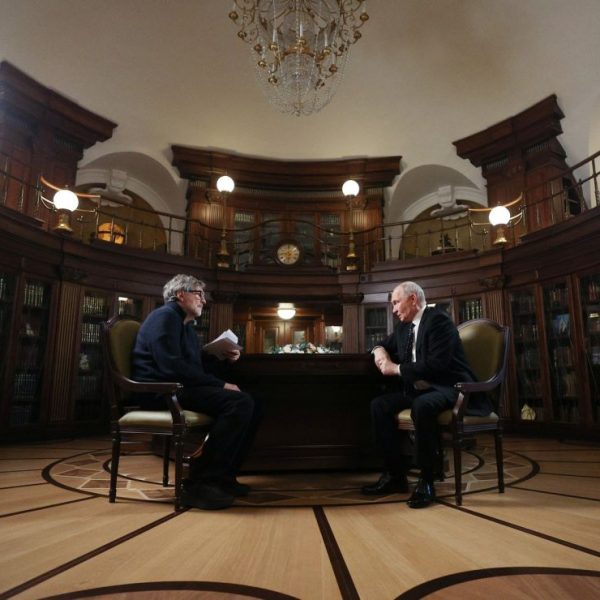
On November 20, 2026, in an interview with Serbian filmmaker Emir Kusturica for a documentary devoted to Patriarch Kirill, Vladimir Putin revived a sixteenth-century formula: "Moscow is the Third Rome, and there will be no fourth." Kusturica had asked him whether Russian civilization could become an ark for those who believe in Christ. Putin answered affirmatively and presented Moscow as the spiritual guardian of the faith and traditions inherited from Byzantium. Amid the war in Ukraine, his statement reopened a controversy that also concerns us in the West. What does it mean for Moscow to claim a heritage it shares with the Rome of the Apostles?
The Third Rome and the heritage of the Apostles
When Philotheus of Pskov formulated the idea of the Third Rome in the early sixteenth century, Constantinople had fallen under Ottoman rule. His judgment concerning the fall of First Rome bore the mark of the confessional controversies of his time. Yet the formula also expressed an idea of continuity. Moscow had received from Byzantium a faith and a liturgy reaching back to the Christianity of the Apostles. For Philotheus, the Muscovite sovereign bore the responsibility of safeguarding that inheritance. Hence the gravity of his words: if the Third Rome fell, there would be no fourth.
In this duty of guardianship resonates the biblical figure of the katechon, the force that restrains the advance of iniquity for a time. An ancient Christian interpretation saw in the Roman Empire a power capable of containing disorder. Applied to the Third Rome, this image emphasizes the responsibility of the ruler. Whoever claims a Christian inheritance assumes the obligation to serve it and to recognize those who share it.
The double triumph of post-Soviet Russia
Many Christians in East and West experienced the collapse of the Soviet Union in 1991 as a liberation. For decades, the regime had sought to erase God from public life. It closed churches, persecuted priests and believers, and attempted to turn man into a product of the state. Faith survived within families, in the parishes that managed to remain open, and, when necessary, underground. The Cathedral of Christ the Saviour, rebuilt on the very site where it had been demolished by explosives, gave this rebirth a public expression in the heart of Moscow.
To understand the strength of this revival, one must recognize a conviction deeply rooted in Russian Christian tradition. For many believers, Russia's history forms part of the history of salvation. That conviction gave meaning to the sacrifices endured during wars and persecution and sustained the transmission of faith.
The second triumph was against the liberal sect of the New World Order, which arrived after 1991 with the fervor of a secular religion. Its missionaries declared history to be over. They believed themselves to possess definitive knowledge of the destiny of nations. This Gnostic pretension already contained the seeds of the Manichaeism that would divide the world between the good, authorized to dictate the rules, and the bad, obliged to obey them if they wished to be admitted into the new order. The showcases of propaganda presented it as a Garden of Eden illuminated by neon lights.
The willingness to treat Russia as a territory available for the taking echoed the way the victorious powers had disposed of the territories of the Austro-Hungarian and Ottoman empires after the First World War. In Russia's case, the partition taking shape was primarily economic. Its immense territory could be reduced to a satrapy of natural resources, with oil, gas, nickel, wheat, and timber sold at bargain prices to Western corporations, a compliant government in Moscow, and a population anesthetized by consumerism and nihilism. Privatization and the concentration of national wealth gave concrete form to what many Russians experienced as the plunder of the 1990s.
And Russia said no. Behind that refusal lay an instinct for national survival that also had Christian roots. The state regained the capacity to make decisions concerning its national patrimony, and the Church once again occupied a visible place in public life. The family and the transmission of faith recovered their importance in the country's understanding of its future. Something the new order had considered obsolete was being reaffirmed: a people is a community of generations, capable of recognizing itself in a shared history and assuming a mission.
Herein lies the affinity between a reconstructed Russia and the Christian West. There was a moment when the possibility of mutual understanding found a political channel. In 2003, during the celebration of the three-hundredth anniversary of the founding of St. Petersburg by Peter the Great, Russia and the European Union invoked their shared European history and culture and agreed to work toward creating a common area of cooperation in external security. The summit demonstrated that both sides were willing to work together to construct a European security order.
The West, meanwhile, is lagging in its own reconstruction. Such a reconstruction remains possible if it can remove the petrified crust of the stale liberalism represented by Davos, which habitually measures a nation by the market it offers and the human person by what he produces and consumes. The Christian inheritance affirms the dignity of the person, the responsibility of the family, and the duties that unite generations. East and West can defend these convictions in two different languages. In this undertaking, the Third Rome can be a natural ally of the Christian West.
We do not know why Vladimir Vladimirovich Putin raised the subject of the Third Rome, but it was clearly not accidental, particularly considering his repeated criticism of a West that is abandoning its Christian roots. At the tenth annual meeting of the Valdai Discussion Club, on September 19, 2013, the Russian president publicly declared:
"We can see how many Euro-Atlantic countries are rejecting their roots, including their Christian roots, which constitute the basis of Western civilization. They are denying moral principles and all traditional identities: national, cultural, religious, and even sexual. They are implementing policies that equate large families with same-sex couples. Belief in God with belief in Satan. Without the values rooted in Christianity and other world religions, without the standards of morality that have been formed over millennia, people will inevitably lose their human dignity. We consider it natural and right to defend these values."
Thirteen years later, the war in Ukraine gives this discussion a different significance. In my view, Putin's reference to the Third Rome can be interpreted as a call for dialogue at another level. If diplomacy loses its ability to contain escalation, a direct confrontation between nuclear powers would place the future of human civilization at stake. In such a scenario, a rapprochement between the Catholic Church and the Russian Orthodox Church could help prevent the conflict from turning into a war of civilizations.
The danger of turning Ukraine into a war between the two Romes
There is one mistake we must avoid at all costs. Using Putin's words about the Third Rome to fuel Russophobia in the West would transform a political controversy into hostility toward an entire people. It is legitimate to question Putin's political use of this formula. The danger begins when it is invoked to portray the Russian people and their Orthodox tradition as a threat to Europe. In this way, a war that requires a political solution begins to be presented as a clash of civilizations.
From there, it is only one step to turning Ukraine into a theological battlefield between the First and Third Romes. Such an interpretation is false and dangerous. If we accept it, we will have lost before we even sit down to negotiate. Rome is not at war with Moscow. And Kiev, the capital of a nation with its own voice and the right to determine its future, is the cradle of the Baptism of Rus'. John Paul II returned to this event when commemorating its millennium in 1988. It represents a root of Eastern Christianity shared by Ukrainians, Russians, and Belarusians. Turning this heritage into a source of enmity would deprive Europe of one of the reasons it still has to seek peace.
A war over territory and security, however difficult, allows for agreements concerning borders, guarantees, and reciprocal obligations. When it is transformed into a war over identity and faith, every concession begins to appear as apostasy, and the very existence of the other becomes intolerable. Interpreting this war through the logic of the clash of civilizations described by Samuel Huntington could lead Europe to destroy the very foundation shared by its East and West. Taken to its extreme, that logic leads to annihilation, while interests alien to the peoples who have suffered the war prepare to administer the ruins and divide among themselves the resources of reconstruction.
A new Helsinki for European security
At the height of the Cold War, governments separated by seemingly irreconcilable differences were able to sit at the same table and agree upon principles of coexistence. The Helsinki Final Act of 1975 brought together commitments concerning sovereign equality, territorial integrity, the renunciation of the threat or use of force, and the peaceful settlement of disputes. It also included freedom of thought, conscience, and religion. The security order outlined there concerned not only relations between states but also the lives of individuals and communities on both sides of national borders.
This dimension explains the importance of Paul VI and Agostino Casaroli. The Holy See had opened channels of communication with communist governments to sustain the life of the Church behind the Iron Curtain. At Helsinki, it defended religious freedom within a common framework. For believers in the East, that freedom meant being able to practice and transmit their faith and having a space in which their communities could flourish. Peace between governments had to produce tangible consequences in the lives of people.
The Charter for European Security, adopted by the Organization for Security and Co-operation in Europe (OSCE) in Istanbul in 1999, affirmed that security is indivisible. Each state may choose or change its security arrangements, including its alliances, while undertaking not to strengthen its own security at the expense of others. The Charter also rejected the notion that any state, organization, or group of states could treat part of the OSCE area as its sphere of influence. The commitments reaffirmed in Astana, Kazakhstan, in 2010 must now be brought back to the negotiating table.
A new Helsinki should bring together Ukraine, represented by its own legitimate authorities and participating on an equal footing, Russia, the other European states, and the United States, all participants in the original process. Washington's military weight gives it a particular responsibility in any agreement concerning military deployments and security guarantees. For these commitments to be verifiable, permanent military communication channels would be needed to prevent incidents, along with advance notification and reciprocal observation of major military exercises, negotiated limits on certain deployments, and mechanisms for examining violations. The states most exposed to the consequences of an agreement must participate in defining their security guarantees.
The sectarian elites entrenched in Brussels, within the European Union and NATO, confuse the positions of their institutions with the voice of Europe as a whole. As long as they continue to treat dialogue with Moscow as a concession, they will contribute to obstructing the negotiations Europe needs. Their sectarianism is also evident in their disdain for the continent's Christian heritage and in the ease with which they treat the Orthodox tradition as though it belonged to an alien civilization.
Those who are unfamiliar with the history of the peoples with whom they must negotiate end up hearing every security demand as a threat and viewing every negotiation as capitulation. Helsinki demonstrated that even freedom of conscience and religion could become a common commitment among governments holding profoundly different convictions.
From Jerusalem to Nicaea, by way of Havana
The diplomacy of Paul VI had its parallel in the rapprochement between the Churches. In 1964, Paul VI and Athenagoras met in Jerusalem. The following year, they removed the excommunications of 1054 from the memory of the Churches. The separation persisted, but the gesture opened a path that John Paul II would continue.
In 1995, John Paul II published Orientale Lumen to commemorate the centenary of Leo XIII's apostolic letter Orientalium Dignitas. He invited Catholics to discover the spiritual, liturgical, and theological treasures of Eastern Christianity. That same year, in paragraph 54 of Ut Unum Sint, he explained how the Baptism of Rus' broadened the meaning of the image of the Church's two lungs.
"In this perspective, an expression I have used on other occasions finds its deepest meaning: the Church must breathe with her two lungs ! During the first millennium of Christian history, this expression referred primarily to the relationship between Byzantium and Rome. Since the Baptism of Rus', however, its horizons have expanded: evangelization has reached a much wider sphere, so that the expression now refers to the entire Church. Moreover, considering that this event of salvation, which took place on the banks of the Dnieper, dates back to a time when the Churches of East and West were not divided, it becomes clear that the path to be followed in seeking full communion is that of unity in legitimate diversity."
Cardinal Joseph Ratzinger had already proposed a concrete path forward in Graz, Austria, in 1976, in what became known as the "Ratzinger Formula." Regarding primacy, Rome could take as its standard what East and West had formulated and experienced during the first millennium. The proposal gave substance to the hope for a communion that would preserve the rites, traditions, and distinctive life of the Eastern Churches. It also required purifying the memory of centuries of grievances and political decisions that had deepened theological disagreements. Ratzinger proposed returning to the form of communion that existed before the Schism of 1054.
Francis and Kirill took a step forward in Havana in 2016. The fact that the first meeting between a pope and a Patriarch of Moscow took place in Ibero-America is significant. Already at Aparecida, in 2007, Benedict XVI had invited us to recognize the faith of our peoples as a living force. In Havana, Catholics and Orthodox together acknowledged the future contained within that tradition. Ibero-America can contribute to the Christian renaissance through its own experience and its capacity to welcome a dialogue that Europe, trapped in its divisions, finds increasingly difficult to sustain.
Leo XIV and Bartholomew renewed that commitment in Nicaea in 2025, commemorating the 1,700th anniversary of the First Ecumenical Council and professing the Creed together. Between Havana and Nicaea, however, a new rupture had emerged. Moscow broke Eucharistic communion with Constantinople in October 2018, during the process that culminated in the recognition of the autocephaly of the Orthodox Church of Ukraine in January 2019. The war has aggravated this division within Orthodoxy itself.
One and the same house
Diplomacy can establish rules for coexistence even among those who disagree profoundly, as occurred in Helsinki. It falls to the Churches to prevent today's divisions from becoming an enmity inherited by our children.
If, at the end of this civilizational crisis, we succeed in restoring full communion between Catholics and Orthodox, as Benedict XVI had hoped, it will be because the Rome of Peter and Paul and the Third Rome have once again recognized one another in a shared heritage that no military victory could ever restore to them. It will be because we have understood that Ukraine is the wound within one and the same house.
And that house, Europe, from the Atlantic to the Urals, will only achieve lasting security if it learns once again to breathe with both its lungs.