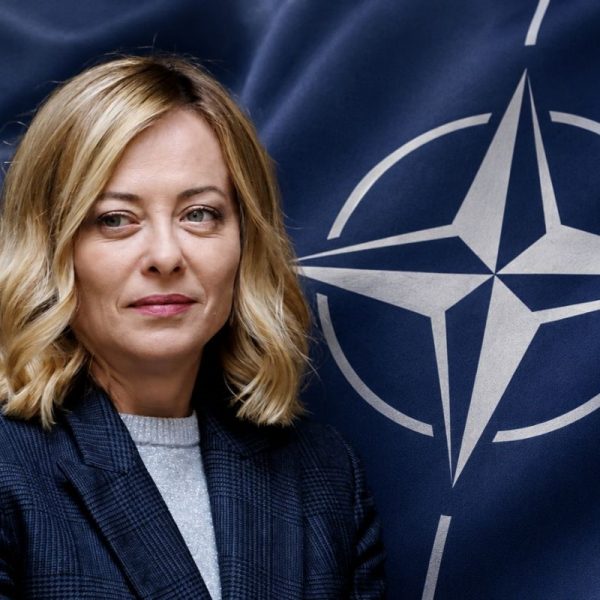
Lorenzo Maria Pacini
Italy has joined the ranks of countries that Russia must factor into a scenario of European war, Lorenzo Maria Pacini writes.
It's not about the money
Four thousand euros per dossier. This is the amount that, according to documents from the investigation conducted by the ROS Carabinieri, GRU officer Mikhail Astakhov paid to former Marshal Raoul Gavino Piras, 59, who previously served with SISMI and later with AISI, and has been retired since 2012. The meetings-four in 2025-took place at provincial landmarks: the viewpoint on Via di Trapasso in San Clemente, Bracciano, and Piazza Trieste in Santa Marinella. The Russian would hand over slips of paper with requests from his superiors; the Italian would evaluate them on the spot, then collect the payment.
The detail worthy of attention, however, is not the setup nor the sum-which was, in any case, modest-that bought twelve years of collaboration, but rather the "shopping list." Because what Moscow asked of Piras reveals, with a precision that no official statement possesses, what the Russian Federation currently considers important to know about Italy. And the answer is: its rearmament.
At the residence in Ladispoli, investigators found material that mirrors, point by point, the "notes" delivered by Astakhov: plans to purchase Storm Shadow and Scalp long-range cruise missiles; the Italian, European, and Atlantic rearmament plans; the development prospects of the Armed Forces; the priorities and objectives of the European Union's defense; support for Ukraine in the production of long-range missiles; and an assessment of the effectiveness of attacks against Iranian nuclear facilities. According to the wiretaps, Piras also discussed with his interlocutor the SAMP/T, the Italian-French air defense system transferred to Kyiv, specifying that Italy had supplied the launch complex and France the missiles. Elsewhere, the Grifo and Aster systems are mentioned, along with Italian interest in the T-90 tank and an exercise in La Spezia involving an autonomous underwater vehicle developed by Leonardo.
Alongside this is the most traditional aspect of the job: names. The identities of AISE and AISI agents; the counterintelligence officer investigating an alleged Russian agent residing in Matera; profiles on the ROS and police cybersecurity; and news about the Italian mission in Bulgaria. According to the case files, Astakhov explicitly requested personal data on military personnel and on Piras's sources themselves, with the clear intent of recruiting them.
It must be noted right away that these are elements of an ongoing investigation, reported by investigators and not yet examined in court. For the purposes of this analysis, however, what matters is not the criminal liability of individuals but the structure of the information needs revealed by the requests. That structure is clear, and it follows a logic.
A military intelligence service does not spend money or expend human resources out of mere curiosity. The GRU gathers what is necessary for Russian military planning. If the GRU asks Italy for its missile procurement schedule, its multi-year defense plans, a map of industrial support for Kyiv, and the names of those working in anti-Russian counterintelligence, it means that, in Russian military planning, Italy is no longer a secondary factor.
What emerges from the investigation is something bigger than a simple spy story worthy of a gripping novel.
Don't look at the finger; look at the moon
It's worth making this distinction, because not all the requested information carries the same weight.
Storm Shadow and Scalp are the same missile, developed jointly by the UK and France, with a stated range exceeding 250 kilometers and the capability to penetrate hardened infrastructure. They are the weapons Ukraine has used to strike deep into Russian targets in Crimea and beyond. Knowing Italy's procurement plans means two things. On a tactical level, it allows us to estimate how many of those weapons could end up in Kyiv and when. Strategically, it allows us to assess what deep-strike capability Italy intends to develop on its own-that is, whether Rome is building an autonomous deep-strike capability or remains dependent on French and British supplies.
The SAMP/T belongs to another category. It is a long-range air defense system, the only European-produced system comparable to the American Patriot. Its significance from the Russian perspective is straightforward: knowing how many systems exist, where they are deployed, and what their actual performance is against ballistic targets means knowing how much it would cost to saturate those defenses. This is targeting intelligence, not political curiosity.
National and European rearmament plans, on the other hand, serve a higher purpose. They do not answer the question "how do I strike," but rather "how much time do I have." A multi-year acquisition plan is a declaration, in accounting terms, of when an army will be ready. Anyone reading it knows in which year the window of relative advantage closes. In the literature of strategic studies, this is the classic "closing window" problem: the perception that the adversary is regaining capabilities is historically one of the conditions that makes a preemptive strike more likely, not less.
Finally, the names. The identities of intelligence personnel have a value that is not informational but operational: they serve to build networks, neutralize counterintelligence, and-in degraded scenarios-to strike. The fact that the GRU requested them from Italy, and not just from Poland or Romania, is a point worth noting.
Don't look at the finger; look at the moon. From the published wiretaps, it appears that Italy is almost ready to enter into direct conflict with Russia. This is the most important point of all.
To understand why Moscow is looking toward Rome, one must examine what Rome has done over the past four years.
Italy has shifted from defense spending that was chronically below the NATO threshold-around 1.4 percent of GDP in 2021-to a trajectory of alignment with the 2 percent target and, following the Hague summit in June 2025, to a long-term commitment toward an overall threshold of 5 percent, divided between military spending in the strict sense and dual-use infrastructure. The accounting methods used to fulfill this commitment-and in particular Italy's decision to include items such as transportation infrastructure and coastal security in the calculation-are a matter of legitimate debate, but the direction is clear.
More significant than the figure is the shift in doctrine. Until 2022, Italy's military was optimized for a specific task: projecting stability in the broader Mediterranean-that is, peacekeeping missions, training, maritime control, and countering illicit trafficking. An army built for Afghanistan and Lebanon, not for the Donbas. The war in Ukraine has brought back into focus concepts that Europe believed were a thing of the past: collective defense against a symmetric adversary, high-intensity combat, the consumption of ammunition on an industrial scale, and theater logistics.
The Multi-Year Defense Policy Document reflects this shift with language that would have been unthinkable in 2015. It refers to integrated air defense, deep-strike capabilities, resupply, and the sustainability of a protracted conflict. The Aster program, the refinancing of missile defense, the acceleration of anti-drone systems, the revitalization of the armored component through the Leopard program, and the GCAP with the United Kingdom and Japan: these are all choices that make sense within a single scenario of deployment-and that scenario is European, not Mediterranean.
The militarization of Europe and NATO's European pillar
Italy is not acting alone, and this is where the Piras case takes on a dimension that extends beyond national borders.
The framework within which Rome is operating is that of an accelerated rebuilding of the European military apparatus. The ReArm Europe plan and the SAFE instrument have made resources in the hundreds of billions available through loans and budgetary flexibility. Germany has amended its fiscal constitution to exempt defense spending from its debt brake. Poland's defense spending stands at around 4.5 percent of GDP. The European Commission-an institution originally created for coal and steel-is now discussing ammunition stockpiles and military mobility.
NATO, meanwhile, has redesigned its operational framework. The new regional plans approved in Vilnius in 2023 have brought the Alliance back to geographic theater planning-a practice absent since 1991-assigning each ally specific tasks within defined scenarios. The New Force Model calls for over 300,000 troops on high alert. This-and not the rhetoric of press releases-is what the strengthening of the European pillar means: not an emancipation from America, but a redistribution of burdens within a structure that remains Atlantic in nature and whose operational logic has returned to that of defending Allied territory against a conventional Russian attack.
In this framework, Italy occupies a position that is by no means peripheral. And it is a position that Moscow has good reason to want to understand.
Today's strategic doctrine places Italy on the Alliance's southern flank, and the implicit assumption is that the southern flank is far from the front lines. This is a mistaken assumption, and the GRU's requests confirm it.
In a high-intensity war on the eastern front, Italy's role would not be on the front lines. It would be in the strategic rear, which in military terms is more important, not less. The bases at Sigonella, Aviano, Ghedi, Naples, Camp Darby, and La Maddalena constitute the infrastructure through which supplies, aircraft, and personnel would pass. The Allied Joint Forces Command is headquartered in Naples. Atlantic logistics in the Mediterranean pass through Italian ports. In a protracted conflict, the ability to sustain the front depends on the rear echelon at least as much as on the forces deployed, and 20th-century military history offers no examples of armies that have won long wars with compromised rear echelons.
Added to this is the industrial dimension. Leonardo, Fincantieri, Avio, Elettronica, and MBDA Italia are key nodes in the European supply chain in sectors (helicopters, avionics, torpedoes, missiles, electronic warfare) where replacement is not a quick process. The reference in the wiretaps to an exercise in La Spezia involving an unmanned underwater system is consistent with this interest: submarine warfare and the protection of critical infrastructure on the Mediterranean seabed-cables and gas pipelines-are areas in which Russia is active and in which Italy possesses capabilities.
Anyone planning a confrontation with NATO must know what to target to slow down the allied machine. And anyone who wants to know what to target in Italy must first know what Italy possesses, where, and when it will have more.
So?
We come to the most sensitive point, which must be addressed without taking shortcuts.
That Italy is equipping itself with the tools for a high-intensity conventional conflict with the Russian Federation is a fact that can be deduced from its procurement programs, its doctrine, and allied planning exercises. That Italy has decided to fight such a war is not an officially declared fact, but the investigation documents-at least as far as they have been leaked-reveal that the country is responding to very specific orders, that it is not the only one preparing, and that the driving force behind this entire complex mechanism is the intention to participate in a large-scale conflict.
The theory of deterrence thrives precisely on this ambiguity. For deterrence to work, military capability must be real, visible, and credible: a weapon that the adversary does not believe you are capable of using does not deter anyone; but a real, visible, and credible capability is, objectively, indistinguishable from preparation for an attack. An outside observer has no access to intentions, only to capabilities. This is the security dilemma as formulated by John Herz, and it is not a correctable flaw in the international system, since it is the system's very structure.
An unpleasant consequence follows: namely, that Italy can arm itself with the purely deterrent intent and still, in Moscow's eyes, have the effect of fueling the perception of an encirclement that is taking shape. Russia may interpret European rearmament as an existential threat and react in ways that confirm to Europeans the necessity of rearmament. The spiral feeds on itself without either actor having to make any decision. The two interpretations-the defensive and the offensive-are not mutually exclusive but describe the same material reality from two different vantage points, and both are, from their respective vantage points, rational.
The Piras case fits precisely within this dynamic. High-intensity espionage on an adversary's rearmament plans is not an activity typical of ordinary peacetime,
but rather the activity that characterizes the phase that scholars of great-power competition call "pre-conflict"-the phase in which war has not yet been decided but has entered the realm of working hypotheses for planners, and in which each side needs to know what the other will be capable of doing three years from now. Intelligence networks are built in advance because, in the event of a crisis, there is no time to build them. The fact that the GRU has invested twelve years in an Italian source, and that over the last three years the questions have become so specifically military in nature, is an indicator of how Moscow is calibrating its time horizons because it knows that Italy will be one of those countries to take a stance should the conflict-long promised by European authorities-break out.
There is an irony in this story that speaks louder than many analyses. For years, Russia has viewed Italy as the Alliance's soft underbelly: a country of widespread sympathies, energy ties, a permeable political class, and a reluctant public. A target for influence, rather than for military intelligence. The kind of country where one invests in narratives, not in targeting plans.
The requests delivered on a bench in Bracciano tell a different story. They reveal that, in Moscow's eyes, Italy has become a military problem: a supplier of long-range systems, an Atlantic logistics hub, an industrial contributor to Ukraine's capabilities, and a player whose Armed Forces are acquiring capabilities they did not have-and did not intend to have-in 2013. You don't spend four thousand euros per dossier to understand a country's opinions but to understand its weapons.
This, more than any statement from Palazzo Chigi, measures how far we've come. Without a public debate commensurate with the significance of the decision, Italy has joined the ranks of countries that Russia must factor into a scenario of European war. Whether this is a desirable state of affairs, whether rearmament fosters security or erodes it, and whether the country has understood what it is doing-these are questions that remain open and cannot be resolved through an analysis of capabilities alone. But the preliminary question-the one regarding the fact itself-has an answer. Someone in Moscow deemed it worth the cost to find out. And someone in Rome is ready to make all the analysts' assumptions a reality, leading Italy to go to war against the Russian Federation.