Michael Hudson
Hello and welcome to the podcast. I'm your host, Jonathan Brown. Now, today we have an interview I made with Michael Hudson late last year. Michael's a truly astounding economist and commentator. I've had the privilege of interviewing him a few times now, and it's always illuminating.
Now, this interview was meant to be part of a celebration of the 17th anniversary of the publication of this book, which has been a quiet bestseller for the last 17 years, the Secret Life of Real Estate and Banking with Phil Anderson.
It was meant to be about that, but the conversation very quickly went off on its own. So, I left the interview out of the podcast about Phil's work, and I just thought, well, it's such a good conversation. Let's release it.
Just as a quick reminder in the interview, I do refer to a guy called Phil, that's Phil Anderson, the author of this book and the cycle, and that's Phil's work.
So strongly encouraged to take a look at that you'll see it in the links after this one. There's some [00:01:00] severe economic turbulence coming our way as Michael talks about. And you can use a lot of fulfill ideas to protect yourself and your family.
So that's enough of, of The Secret Life of Real Estate and Banking.Let's just get into the interview. I start with a question to Michael about what he's been working on. So, let's just jump straight into his answer.
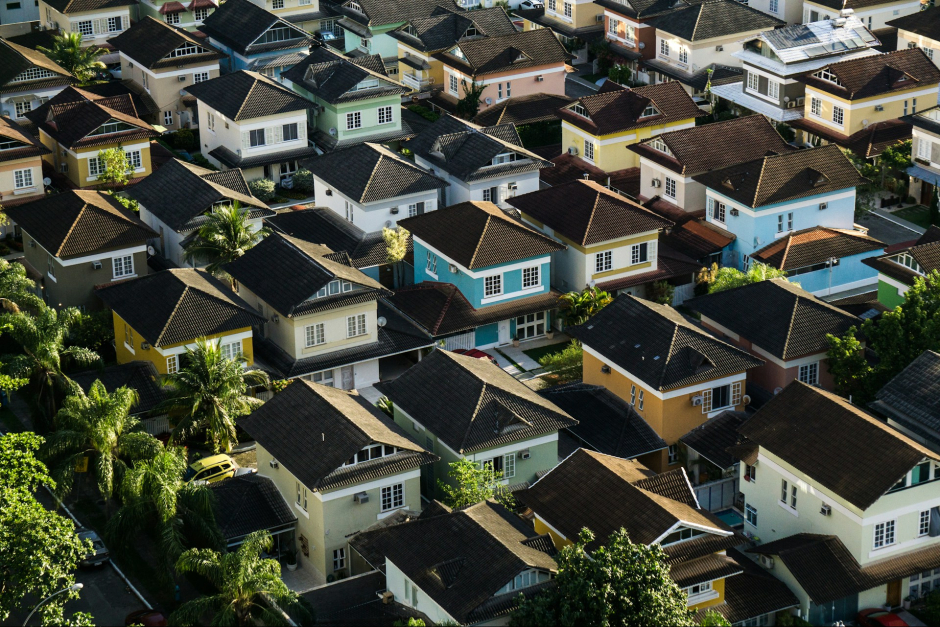
Michael: I've been trying to finish, a book that I'm writing myself. I look at how the whole environment for real estate is changing. The whole real estate environment, the tax system, the increasing debt burden of real estate, you're seeing a whole transformation in real estate away from owner occupied housing toward, certainly in America and Europe absentee ownership, of housing by large, financial institutions like BlackRock, et cetera.
jonathan: Do you invest in property yourself?
Michael: No longer, no. I own my own condominium.
It is very hard to invest in [00:02:00] property in New York if you're not a major player. You're not well represented in landlord Tenant court. It's a fixed game in New York. Real estate investors together have a particular attorney that they use, and he represents maybe thousands of people.
I had one run as a tenant. I had one run into him and whenever the judge or mediator began to talk in my favor, he said he had another client and got another judge.
The real estate investment in New York is so utterly corrupt. In, 1980, I contracted to buy my condo on Murray Street, a block from the World Trade Center. The lawyer, bought the property for himself. And then tried to evict us, we sued.
We got a very good lawyer and sued him. And then he said, well, I've just sold it to Skadden Arps. They're the most powerful landlord in the city. And, Skadden Arps tried to evict us. There were four other unit owners in the building. Skadden refused to put me on the negotiating board. I was on the second floor right over a pizza parlour against my wishes. They rented to a pizza Parlor. The heat went up to 86 degrees constantly. I was able to delay the transfer of property for five years, during six years, we didn't pay any rent at all because, the property was contested. Finally, I sold out. I sold out because I didn't want to live in the 86 degrees.
The building department works for the landlords, not for the tenants. And, I have less than $2 billion, so I'm unable to pay the bribes to the politicians' campaigns that, finance the inspectors and I had to move, which is very fortunate because, shortly thereafter, the World Trade Center, a disaster happened with the airplanes.
And not only the building, but the entire neighborhood was filled with poison, air, and debris every. Everything that was electric or movable. Xerox machines, cameras were all completely covered up with dust. So, I escaped all that by having to be forced to move. But that's my experience with just trying to buy an apartment for oneself.
It's a very predatory market and I think its one reason why Mandami has won the New York Mayor election promising to try to make real estate more affordable. But unless he's able to get rid of the corrupt judges and the corrupt building department that Mayor Koch brought in Although Mayor Koch wasn't corrupt himself, he surrounded himself with corrupt people because they're his campaign contributors. And then Giuliani completed the corruption. So, this is not a game for amateurs to play in investment.
To me that changing character of the real estate market is the most important thing. The average rent in New York city is now over $4,500 a month. So, you can imagine how much money you have to pay just in order to afford housing here.
There's a big fight against rent control, and the rents have already been so high that it's almost transformed real estate from what it was in the past.
That's why I don't like thinking in terms of cycles. I wanna look at the transformation of the real estate market and how the increasing real estate prices as a result of increasing debt leverage as banks lend more and more of the purchase price to borrowers and a property's worth whatever a bank is going to lend.
So, to me, real estate is a byproduct of the financial sector. That's what I look at. I don't isolate real estate as a sector in itself; it's a derivative of the financial sector.
jonathan: Yeah. And so, Phil's predictions we're following the 18.6-year cycle, which forecasts the peak, in 2026. Then likely a possibly catastrophic crash. Not dissimilar
Michael: that's quite likely
jonathan: to your forecast in 2005-6 when you wrote the Vanity Fair article.
Michael: Okay what's happening now, number one. You have a weather change and the bad weather has increased insurance costs so radically for housing, not only in Florida, but in the Midwest where there are hurricanes and floods, the south, that real estate is falling further and further behind.
The people below 35 years old are not able to buy many homes anymore. They tend to be renters because they simply cannot afford to buy. And the large private capital companies have become the main buyers.
For individual family buyers, the insurance costs are way up. The interest rates are certainly rising for real estate loans, not for big corporate loans, but for real estate loans. So, there are specific reasons why the real estate, certainly in the United States. Same thing in Europe. The economy for the 90% of the people is shrinking in the United States.
That's why a lot of today you have the internet, and Nvidia, stocks going up and you have the Dow Jones Industrial average going down. That's been happening all year long. So you have the real economy certainly, people private home buyers are less and less able to afford housing. And, the result is a sharply declining proportion of Americans own their own homes, especially in New York City, that is primarily in a landlord owned economy.
jonathan: Would you take us through what your research shows about the changing structure of ownership.
Michael: Well, it's largely owned by absentee landlords and specifically by large, financial companies, such as BlackRock and, large companies that are buying the housing.
And when the interest rates begin to go way down for borrowers, less so for homeowners, the firms that were able to borrow - the big capital investment firms said, well, in the past you're buying property, you made your money by borrowing and earning rent.
But now they realize that most of the money made on real estate is made by the bankers. Rent is for paying interest, and rents going up because that is the winner of any real estate purchases, whoever pledges the highest proportion of the land's rental value to pay the bank for the money that they borrow to outbid rival bidders for this property.
So, rent's for paying interest and the large companies that have been buying said, well, we can make more money. we can outbid the private buyers of real estate because, if we buy for all cash, we borrow money for ourselves, not against the building, but for the company itself. And then we buy the building as whole owner, the building itself, for all cash and we don't have to pay a mortgage.
So, the costs of carrying the property by a large company is much lower than it is for homeowners. So, they can afford all of this, but now the private capital companies are in a squeeze. So, they may pull back from the market, especially as the ability of the population at large to pay rents is falling back and as the costs of insurance, because of the bad weather and all of the other problems is also rising.
jonathan: And, I know in your career you've done a great deal of work taking your research way back into history. Phil has only done 225 years of research into the American land cycle going back to the Harrison Act of 1800, what's your endorsement of taking that historical view of a market or of a country?
Michael: it is very interesting that he called it a land cycle ? It's really a financial cycle. It's not that real estate is going up and down. It's the whole financial economy, the debt overhead, the debtor creditor relationship is responsible for the real estate cycle.
It's not that real estate's going up and down because of population growth or other things- it's the financial cycle. It would help to compare the real estate cycle with the stock market cycle, the railroad stock cycle, all of the other cycles. And you'll see, that there are reasons for the cycle of the number of years that Phil says. And the reason is that it's a constant buildup of debt and then a break. And the collapse of the break causes a crisis, a plunge, and that's what causes the real estate cycle to be engulfed in this financial plunge that affects the entire economy.
jonathan: And I know in some of our previous conversations, you've spoken of how the asset value or the asset appreciation or inflation generates liquidity in the marketplace, which allows them to do more and more speculation which then leads to a bigger and bigger crash.
Michael: Yes, it's a Ponzi scheme at a certain point. And, as the 2008, 2009 crash was, but the aftermath of that was completely different from other crashes. In most crashes, what happens is the crash wipes out the creditors along with the debtors. There's a bankruptcy and the debt goes back down and there's a recovery.
Instead after 2008, the Obama administration that came in in January, 2009, followed the quantitative easing, flooding the banking system and the financial system with the zero-interest rate policy that made that debt pyramiding and speculation an easy way to make surefire gains so that the recovery in real estate prices wasn't a result of debt being wiped out- just the opposite. It was vast new debt being created. That's what a Ponzi scheme is.
You create new debt to pay the earlier players in the scheme. So, you had an inside out recovery as it were. Unlike the past, when there was a crash, the response by the Fed of flooding the market with zero interest rates, flooding the banking system and coming right out, and the Fed bought long-term mortgages. It permitted Fannie Mae to raise the federally insured packaged home mortgages to the point where they absorbed 43% of the home buyer's income - no longer the 25% which was the case when I bought property in the 1960s.
jonathan: So, based on all those things then, what's your assessment on where this is going to go in the next few years?
Michael: It may very well be a crash in 2026. That makes sense to me. The stock market's gonna crash, most people say, because it's so overpriced. All of the signs by the technicians who follow cycles and follow all of these market charts, say that there's gonna be a crash. So, it looks like right on schedule there may or will be a crash in 2026. That sounds plausible to me.
jonathan: And Michael, in your career, you have consistently gone against the grain of the conventional view.
Michael: There are two conventional views. The conventional views that I agree with are the insiders on Wall Street. The conventional views in the mass media and, the newspapers are the exact opposite.
So, there's a kind of propaganda. And then there's what the economists and the insiders and the big investors know themselves and the reality. So, there are two sets of views, the reality views of the wealthy successful people and the unreality views of the victims. So, the question is what set am I agreeing with?
jonathan: Oh, so one of the strange things then, because you're so committed to helping other people, how is it that you've got the same view as the predators on Wall Street ? How has that come about?
Michael: Well, I worked on Wall Street, that's where I learned how the economy worked. I went to work in 1961-2 for the Savings Banks Trust Company, which was a central bank for the savings banks and for three years, my job was tracing mortgage loans, bank deposits. The increase in the recycling of the exponential growth in bank deposits, just as a result of paying dividends every three months.
The growth in savings deposit, that would be like a zigzag and just exponential growth. And this money was all being recycled into mortgage loans 'cause that's what savings banks like savings and loans did. And so, I could see that that real estate pricing was finance driven, primarily. Nowhere in my entire PhD education at NYU did real estate ever come up as an economic category. The economy was like something homogenized - everything the same, no segregation of real estate or the financial sector is distinct from the industrial sector.
And then, once I went, to work for Chase Manhattan, it was part of a group of, let's say, investors of [00:16:00] economists all of whom had a socialist Marxist background. And we'd get together regularly, and discuss everything. And, we worked on Wall Street because they didn't care what our political views were.
All that the banks cared about was whether I and my friends were right or wrong. That wasn't the case in the universities. At the universities, they didn't care if we were right or wrong, just that we believed their ideology. So, I found Wall Street much more ideologically open than academia.
So I, apart from teaching for three years at the new graduate faculty of the new school here, I've always worked with Wall Street and then with the Hudson Institute, largely on the corporate environment studying how the economy worked, and that's where I developed the polarization of the economy between the financial sector at the top, impoverishing and indebting the rest of the economy, the bottom 90%.
And real estate was part of that because the financial sectors, basically real estate, 80% of bank loans in the US, Britain, I'm sure Australia too, is for real estate not for industry.
The banks make loans against assets and property that's already in place. They don't make loans to create new capital investment. That's for IPOs in the stock market. They make loans against what do you have to pledge as collateral.
It's all pretty much fixed by local big borrowers. In 1980, I tried to refinance my mortgage, tried to mortgage with Chase Manhattan, and, this was on a slum area in New York the lower East side, second Street in Avenue B. And the bank sent an appraiser over. He kept wanting to run outside and see whether the Puerto Ricans in the neighborhood had stolen his tires off his car yet. I bought the house for $45,000. He said, no, we can't give you a more of a mortgage on that. So, a month later I put it up for sale for $220,000.
But the bank had redlined the lower East side, and the reason they'd redlined it was for all of the big capital firms to come in, buy up the whole Lower East Side and do for New York City's low-income areas, what Obama had done to Chicago with the black neighborhoods in the west side. Tear it all up. Make billions of dollars for his clients and the Crown family and [they] gentrified the whole neighborhood. That's what happened to the Lower East Side.
I did buy the apartment house next to me, for $12,000. I tried to develop to create it into a condominium, selling it to the tenants for $2,000 a floor. The rent I was getting was like $40 a month, $50 a month. The rent is now $2,500 a month, and these floors go silly as it is $250,000 to $300,000. Nobody would buy them. They didn't believe that the property prices would go up so much.
The whole phenomenon in the 1980s was the transformation of rental properties into condominiums. A speculator would buy a building. Put down 1% of the money, take a 99% mortgage, buy the building, and then offer it to the tenants as a condominium. And then he would charge an equivalent that they would've to pay for the entire mortgage value that they would have to pay all over again. So, he got the building essentially for 1%, he multiplied his investment a hundred times. That's what created so many multimillionaires among the landlord class in Manhattan- panicking people.
If you don't buy the condominium or the co-op, whatever we're turning it into, your rent's gonna go up [00:20:00] from a few hundred dollars a month for many thousand dollars a month. That's a transformation of the real estate market that transcends any kind of a cycle itself. It's a transformation of the market structure for real estate.
jonathan: Are there any other things that, in your findings that's the same as the most aggressive investor on Wall Street, that'll be helpful for our listeners to know.
Michael: Well, we watched what they did, but none of us were rich. You know, we were just regular people and, we analyzed what was happening. We could see what was happening, but, because we weren't multimillionaires, we weren't allowed to play in the game, we could only look at the statistics and analyze it, and people hired us to explain it.
I think, they knew that we realistically realized that the real estate game, the stock market game, it was a ripoff. It was a free lunch. The economy's all about getting a free lunch contrary to what Milton Friedman said.
And we knew it was a free lunch. We knew it was exploitation. We knew it was all about economic rent. But that's another thing that nobody discussed. The concept of economic rent is a free lunch.
And that's really what made our approach different. We looked at the phenomenon of economic rent, which does not appear in any of the economic models or in the national Income models or the GDP models. They don't realize that there's a distinction between earned income by playing a productive role and collecting rents and rising property prices in your sleep as John Stewart Mill put it.
jonathan: Hmm. Brilliant. When's your next book out?
Michael: It's on the financial sector's transformation of European and world's politics from the Crusades to World War I. I finished the whole book in first draft. I then added a whole chapter on Persia, and the ripoffs that it had by turning over its key sectors to foreign monopolists. And my focus is on how Europe developed the whole spirit of classical economics from Adam Smith to John Stewart Mill to Marx and the socialists onto the Americans school was, all about trying to free markets from land rent to get rid of economic rent, monopoly, rent, natural resource, rent, land rent- to get rid of the rentier interest in order to have a low cost economy so that Britain, France, and later the United States and Germany could compete with other countries and avoid the high costs of having to support a landlord class and a monopoly class, and all the inheritance from the feudal period.
And, that was not how the European investors invested abroad. So, you had a dichotomy in the way the world's developed. And, this started really to become extreme in the 19th century. European, Europe and the United States were industrialized, capitalist nations keeping monopolies and as many functions in the public domain as possible.
In Europe's and America's foreign investment, they sought rent yielding investments, mineral rights, land plantations, public monopoly, infrastructure monopolies. And so, you had a whole different structure of opposition to rent that made the industrial core so successful and competitive.
And the periphery rent racked economies that, never had a chance to develop in the way that, Europe and the United States did.
jonathan: So, one of the things I would like your, your thoughts on are, when I look at the way that the private equity companies have bought insurance companies, and so there's more and more focus on the fire sector. And insurance companies are paying out less and less over here. It's now so bad in the UK even that part of me thinks I don't really see the point of getting insurance cause they're not gonna pay you out anyway when the crisis happens. What's your sense on how we get out of this mess?
Michael: The quickest way to make money for an insurance company is to go bankrupt. You sell your insurance at a much lower price than your rivals. You get a big audience, especially if you're dealing with a hurricane area. You offer the insurance and you get a lot of money in.
And then the hurricane hits or a flood occurs, and they're wiped out and you say, oh, we already paid out all of the insurance premiums in dividends and our own management fees and maybe some stock buyback so we're bankrupt.
Well, I watched that happen a number of times from the 1960s onward, and, to paraphrase the title of my colleague Bill Black's book. The best way to rob an insurance company is to own one. His title was The Best Way to Rob a Bank is to Own One.
They plan on not being able to pay their debts, because they've stripped all of the assets to pay themselves income or to buy their own stocks, to push up at price and make a short-term gain. And, leaving the government to pick up the pieces or the hapless insurance customers to try to get by while their properties wiped out.
jonathan: A lot of these private equity firms have bought the pension funds, the pension fund liability, or they've sold the agreement to pay those things. I only see risk and danger. Also, the insurance that the pension funds that are not bought by private equity, they're buying what the private equity is selling either in loans or obligations. And I just don't see any security anywhere in the system anymore. It's just fragility
Michael: The only rational way to have done this is the German way, a pay as you go. It's crazy to make the pension funds and, it was in the 1960s, it was called pension fund capitalism, or even pension fund socialism because, you would make the employees save the money and then lend it to a financial institution that would lend it to other financial institutions. And, that was this flow of pension money savings is what pushed up the stock market prices.
Well, right now the stock market looks like it may crash and the average stock market crash from a boom to a bust is 50%. So, if the stock market and the Dow Jones average is now, let's say 48,000, it'll fall at 24,000. All of a sudden, the pension funds are not going to be able to have the capital to pay the pensions they promised. So, the poor pensioners are going to be left without the pension, just like the customers for insurance companies, but the pension fund managers will have paid themselves enormous amounts of money for management premium. So again, the financial sector is inherently a ripoff. That's why it should be managed in the way that China's managed finance and real estate should be public sectors should and state owned.
The government should base the tax system on land rent and other economic rents- not as the classical economists said, not, not leaving this for private free lunch rentiers to have but the whole financial sector is a rentier economy and the financial sector lives in the short run. You make money in the short run. You expect it to crash; you figure out how am I going to get out when that crash comes ? I can take as much as I can in the short run, leave the victims to suffer later. And I've talked to a lot of investors and they actually enjoy having got their money out and other people are losers. Their pleasure is other people's losing more than their own pleasure in winning. I mean this is an antisocial mentality.
jonathan: Hmm. Shocking. Well, Michael, let us know when the book's out and then we'll, I'll give it a read and we'll hop on and do another interview.
Michael: I always like these discussions 'cause I come up with new ways of formulating the problem. I think we've touched on a good sense of proportion today or at least I hope we have.
jonathan: Yes Thanks very much.
Jonathan Brown: Thank you for listening to the Shepheard Walwyn Podcast. To explore these ideas further, be sure to visit our website, www.shepheardwalwyn.com, and join our mailing list for news and special offers. Check out our authors and buy the books to learn more. And you can also find us on social media. Links are also on the website.
And if you like the podcast, please head over to iTunes or Spotify to give us a review. It's surprisingly helpful in getting the ideas out there. So, until next time, keep reading.
Photo by Breno Assis on Unsplash