Lorenzo Maria Pacini
The war in Ukraine is characterized by a profound imbalance of resources, weaponry, and industrial potential. It has become such a fierce meat grinder that even the Ukrainians themselves no longer believe in their leadership. The desperate attempt to alter the state of affairs with the assassination of General Alexeyev is a risky move that defies all common sense and balance.
Until the very end
Anyone who thought that Volodymyr Zelensky and his criminal clique would stand firm in the face of attempts at reconciliation between Russia and the United States of America was sorely mistaken.
In Kiev, they have no hope left and know exactly what to do when all is lost: seek the impossible, derail any diplomatic solution, destroy what remains and, if possible, escalate the situation. It does not matter if this means seeing Ukraine set ablaze, or if it means sacrificing more young men torn from their future to die in the trenches of the saddest war of the century: for Zelensky, the only solution is to harm Russia, and he will not stop.
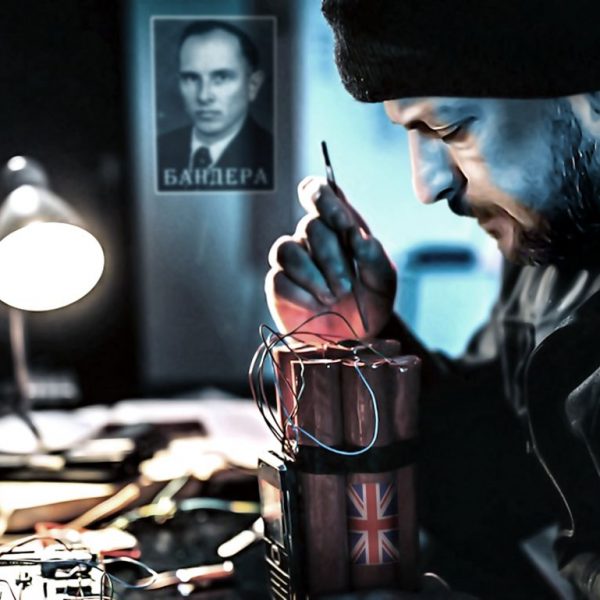
On the morning of February 6, 2026, Lieutenant General Vladimir Alexeyev, first deputy head of the GRU, was shot several times in the back at his residence. After emergency surgery, he is now in critical condition. The attacker fled.
The intent is very clear: the Kiev government does not want peace under any circumstances. Once again, with yet another demonstration, they do not want peace. They prefer to see soldiers die and the people suffer. They prefer to be remembered as saboteurs of the only chance for peace, rather than as contributors to that peace. The Western media deny and will continue to deny this truth, but it does not change: the Ukrainian government does not want peace.
A major attack on Russian territory is extremely serious in many respects. In a context of prolonged conflict such as that between Russia and Ukraine, any operation that crosses national borders can irreparably damage the fabric of international negotiations and reinforce the argument for uncontrolled escalation.
On the diplomatic front, Moscow is entirely justified in considering this terrorist operation as a further violation of its territorial sovereignty. Peace negotiations, already stalled or heavily influenced by the opposing positions of the parties in conflict and their allies, would risk suffering a significant setback. The United States, the European Union, and other international mediators would face a dilemma: publicly condemn the action to safeguard the legitimacy of the diplomatic process, or downplay it and seek compromises so as not to further alienate Kiev from a possible agreement.
In this scenario, the action, presented on the one hand as a legitimate response to incursions or pressure on the battlefield, is perceived as a deliberate attempt to sabotage the dialogue. The logic is simple: provocations of this kind can radicalize positions, consolidate nationalistic rhetoric, and reduce the willingness of the parties to find common ground. The immediate effect is greater mutual distrust, with a corollary of strengthened security measures, withdrawals of negotiating delegations, and a possible hardening of pre-negotiation conditions.
Even militarily, this makes no sense. The war in Ukraine is characterized by a profound imbalance of resources, weaponry, and industrial potential. Ukraine alone did not last even a month and had to ask for help from the collective West right from the start, and despite billions and billions of dollars and euros invested, the Ukrainian armed forces continue to suffer defeats. The war has become such a fierce meat grinder that even the Ukrainians themselves no longer believe in their leadership.
The desperate attempt to alter the state of affairs with the assassination of General Alexeyev is a risky move that defies all common sense and balance. From the mediators' point of view, such events make it more difficult to argue in favor of a ceasefire or controlled de-escalation, as they fuel the narrative that peace is unattainable except on punitive terms for one of the parties. In other words, Kiev is trying to prevent peace with all its might.
US diplomacy, already engaged in balancing support for Kiev with the need to avoid a wider war, will now find itself in a politically and strategically precarious position. Washington may be called upon to dictate more stringent conditions to the Kiev government so that provocative behavior does not compromise the negotiating efforts. However, this will lead to internal tensions, not so much in the US as in Ukraine, where several politicians are tired of Zelensky's follies.
Useless imbalances
It is true that imbalance is also a weapon, and in the history of international relations, victory over an adversary is not achieved exclusively on the battlefield. Diplomatic imbalance, strategic pressure, targeted destabilization, and even attempts at controlled escalation can become functional tools for achieving political and strategic objectives. Diplomatic imbalance occurs when one party manages to isolate the other internationally, limiting its alliances, access to markets, strategic supplies, or political legitimacy. This reduces the enemy's ability to sustain a prolonged effort, undermines internal consensus, and fuels divisions among the elites. Diplomacy, in this sense, becomes a force multiplier: it can amplify military results or compensate for difficulties on the ground. But every detail must be carefully calculated, and on this occasion it seems that the comedian in Kiev has gone too far with his joke.
Now this disaster will have to be managed by the Americans themselves. It is unlikely that the operation was orchestrated in concert with the American apparatus, and it would not be the first time that Kiev has made risky choices and risked compromising everything. Even in the media, this event will have a terrible boomerang effect for Ukraine, increasing criticism in public opinion and suggesting that support for this war was a mistake from the outset.
The Americans themselves will have to try to make Zelensky and his henchmen understand, by hook or by crook, that terrorism and sabotage are the sure path not to peace between Russia and Ukraine, but to eternal peace.