By A Midwestern Doctor
The Forgotten Side of Medicine
December 1, 2025
A key goal in writing this publication has been to provide a voice to those forgotten by medicine, so I try to respond to all the messages I receive-particularly those in dire need. However, as this publication has grown, it's become more complex and more challenging for me to do that adequately due to the volume of correspondence I receive. I hence decided to have monthly open threads where readers can ask whatever they want and connect it to a shorter topic.
A few days ago, while talking to a circle of friends about child-rearing, one mother compared an infant's tendency to throw tantrums when sugary foods were withdrawn to what many parents were facing with modern children's video programs and that she'd learned in the groups she belonged to that numerous parents were now switching to showing their children the shows they'd grown up watching as those shows did not have the same destabilizing effects on their children.
As we discussed this topic (e.g., many of us have banned screens after noticing how negatively they impact developing nervous systems), I realized it needed to be an open thread here due to:
• How unfair and tragic it is that due to the modern toxicity they are bombarded with, so many children no longer have health and spark within them which brings joy to everyone around them.
• All the problems we discussed with children directly tie into the central issues I feel are facing much broader segments of society (e.g., the dopamine trap society uses to control us and make us feel dead inside).
Note: it continually astounds me (and those I point it out to) how different naturally raised children are, and how much rarer they are becoming, given the many fronts on which the predatory forces around us are attacking our health. For those interested, some of the most important strategies I've come across for raising healthy children are discussed here.
Addictive Programming
From investigating the current state of children's programming over the last few days, I found out that large swathes of parents online frequently describe modern children's "TV" content (particularly YouTube kids videos such as CoComelon) as highly engaging to the point of addiction, with intense emotional reactions (e.g., tantrums) when it's removed. For example:
• A 2025 Talker Research survey of 2,000 U.S. parents found 22% report "full-on tantrums" as a side effect of excessive screen time, alongside irritability (27%) and mood swings (24%).
Note: this report has a lot of other disturbing statistics (e.g., 67% of parents fear they are losing precious time with their children due to screen addiction).
• The 2025 Common Sense Media Census states: "A quarter of parents use screen media of any kind (not just mobile devices) to help their child calm down when they are angry or upset (25%)" and "17% of parents reporting that their child sometimes or often uses a mobile device to calm down when feeling angry, sad, or upset."
• In parallel, similar results can be found online. For example, on Reddit parenting forums, searches for "Cocomelon tantrum" or "screen time meltdown" yield a high volume of threads from the last 5 years (thousands according to two AI systems I queried), with parents describing similar patterns: calm during viewing, explosive tantrums (screaming, hitting, inconsolable crying for 20-60+ minutes) upon shutdown, that is often far worse than what was seen with slower shows like older Sesame Street.
• Pediatric resources like the American Academy of Pediatrics (AAP) acknowledge these issues in their clinical guidelines, noting that high-engagement digital media (e.g., auto-advancing games or videos) can lead to tantrums when interrupted due to the media containing behavioral reinforcement designed for maximum engagement.
Furthermore, online reports from parents surged following 2015 as YouTube became much more popular and kids content there shifted to being optimized for toddlers to view without their parents. Research on the effects of overstimulation and attention, in turn, suggest this is addictive and creates ADHD-like symptoms as:
• Modern shows' rapid cuts (1-4 seconds) overstimulate young children's developing brains, making it hard for them to disengage and sustain focus on slower tasks (termed the " overstimulation hypothesis").
•A 2011 study exposed 4-year-olds to 9 minutes of fast-paced SpongeBob SquarePants (11-second cuts) vs. slower Caillou or drawing; the fast-paced group showed immediate deficits in executive function (focus, self-control) lasting up to 4 hours post-viewing-which was not seen in the slower content.
Note: The AAP cites this in its guidelines, recommending that parents avoid fast-paced programs for kids under 5 due to poor comprehension and strain on regulation.
• A 2004 study of 1,278 kids found over 2 hours a day of TV before age 3 was linked to attention problems (e.g., ADHD-like symptoms) by age 7, with fast-paced content being a key factor.
• A 2018 review found early fast-paced exposure correlated with later attentional deficits, as it "rewires" developing brains toward novelty-seeking over sustained focus. Likewise in mice, excessive sensory stimulation decreased anxiety, learning, and memory and increased risk-taking and motor activity.
• A 2023 study linked higher toddler screen time to increased anger/frustration later (e.g., withdrawal tantrums), with each extra hour raising risk by 13%-specifically, preschooler screen time at age 3.5 prospectively contributed to more expressions of anger/frustration at 4.5.
Since many parents specifically cited CoComelon (a YouTube channel) as being particularly problematic (to the point many stated they'd banned it), and often attributed it to the show's rapidly changing frames every few seconds, I watched a few of them to verify this (noting how disorienting it was to watch this as the shots frequently change every 1-4 seconds).
Note: many people I've spoken to over the years believe the shorter and shorter segments (before a screen cut or transition) which emerged on TV was immensely destructive to the American psyche as they took away people's ability to maintain a lengthy attention span (which amongst other things is necessary to perceive the deeper things around which give true meaning to life or be content in the present).
After exploring why YouTube kids channels like CoComelon do this, I came across a series of explanations, which while appalling, are entirely congruent with my understanding of internet marketers:
• This maximizes "watch time" on YouTube (how they make money) as YouTube's algorithm heavily rewards total minutes watched and session length. Very young children (1-4 years old) have naturally short attention spans. If a scene stays the same for more than a few seconds, toddlers often look away or grab the remote/phone. Rapid cuts act like a visual "ping" that yanks attention back to the screen every few seconds, increasing average view duration.
• Every sudden cut, zoom, color flash, or new sound triggers the brain's automatic "orienting response" (the same reflex that makes you turn your head when a door slams). In babies and toddlers, this reflex is especially strong and hard to inhibit. CoComelon and similar channels appear to exploit it hundreds of times per episode, creating a near-constant dopamine loop that feels rewarding to an immature prefrontal cortex.
• It's designed for the "auto-play" environment. On YouTube and Netflix, the following video starts in 3-6 seconds unless someone intervenes. Fast pacing makes kids much less likely to look away during that critical window, so autoplay chains them from one 8-15 minute video to the next (often for hours). This is likely why CoComelon uploads videos in the hundreds and titles them almost identically (as this creates an endless loop of their content).
• The big YouTube kids channels almost certainly constantly use available analytics to determine their pacing, colors, sound effects, and character design and most likely have found that cutting every ~2-3 seconds keeps 2- to 4-year-olds glued to the screen more effectively than slower pacing. Slower-paced versions tend to get lower completion rates and worse algorithmic performance, so they're discarded.
• Classic slow-paced shows (Mister Rogers, old Sesame Street, Blue's Clues), in contrast, were deliberately calm and used long takes because they were designed for developmental appropriateness (and were often watched with a parent). Modern YouTube-first content is intended to be watched alone by a toddler holding a tablet, with no adult co-viewing required, so "grab and hold attention at all costs" wins.
Note: Mister Rogers shared in interviews he would often leave a pause after he said things so children could have the time to process how they felt about it-effectively the polar opposite to what these channels are doing.
All of this has a startling number of implications. Of these, I believe the following are the most pertinent:
1. A large body of evidence has emerged (including numerous regretful statements from tech executives) that screens and all the content associated with them have been designed to be as addictive as possible, with much of this revolving around them having stimuli that trigger dopamine releases. In parallel, quite a few social media executives have said they have tremendous regret about what their products ( intentionally designed to be addictive) have done to our children's brains. Likewise, many articles have been written about how Silicon Valley tech executives send their kids to an alternative school where phones and screens are banned.
Note: as mentioned before, I am inclined to believe this is true, in part because I know marketers are always trying to concoct ways to hook people with their products (a process that has gone into overdrive since the internet has enabled the rapid testing, refinement, and distribution of addictive content) and partly because I frequently feel many of the ways tech messes with your neurology to pull you in (which again touches upon how unexpected it was for me to suddenly end up in a position where I had to spend a lot of time on the computer after this newsletter took off).
2. After the DPT vaccine entered the population, due to its frequent tendency to cause encephalitis, a wide range of neurological and behavioral issues (including violent crime) rippled out through the society as the vaccinated children grew up. In the 1950s, a condition termed " minimal brain damage" [MBD] was coined (with the defining characteristic of it being hyperactivity), which before long became "perhaps the most common, and certainly one of the most time-consuming problems in current pediatric practice".
The symptoms of MBD (as defined by America's Public Health Service and the American Psychiatric Association) have a significant overlap with what was seen after encephalitis, DPT injuries, and what was associated with autism. Eventually, they figured out that much of it could be "treated" with stimulants like amphetamines. At that point, the disorder was renamed ADHD (something that coincidentally, every vaccinated-unvaccinated comparison shows is vastly more common in vaccinated children).
Note: Canadian physician Gabor Maté has reported that a significant number of the homeless, often stimulant-using, addicted patients he worked with showed signs of undiagnosed ADHD. He (and others) have said that when their ADHD was recognized correctly and treated-usually as part of a broader trauma-informed approach (as he attributed this change to childhood trauma rather than vaccine injury)-it often helped them stabilize and reduce the destructive cycle of their addictions and the criminalized behaviors associated with them.
3. I have long suspected something similar to what happened with ADHD and amphetamines is happening with screens, as their highly stimulating (and dopamine-releasing) nature is essentially being used to counteract the behavioral disturbances seen in vaccine-injured children. This is particularly insidious because many parents (especially those with less financial resources) are frequently forced into situations where they don't have the bandwidth to handle their children continually misbehaving, so they are forced to provide their children with addictive technology (and transform them into lifelong users).
Note: an argument can also be made that the mass adoption of screens is a reflection of the economy making it harder and harder for parents to have children.
4. I have long believed a key reason slavery ended was that owning slaves within America (which has numerous associated costs) became less profitable than forcing people into economic servitude, particularly since much of the labor slaves performed could be outsourced to poorer nations where far fewer protections existed for basic human welfare and that cruelty could exist out of sight and out of mind for those who would object to it.
In turn, since the desire to ruthlessly exploit people for profit never fully disappeared from the culture, other ways more profitable ways were found to do it, such as turning people into lifelong customers of the pharmaceutical industry until they eventually succumb to all the ever-increasing number of prescriptions they are placed on ( a process which is often set in motion by the chronic illnesses frequently triggered by vaccination-and which I've recently heard be termed " biological colonialism"). To a large extent, I feel the same thing is also happening now with harvesting people's attention online and collecting their data.
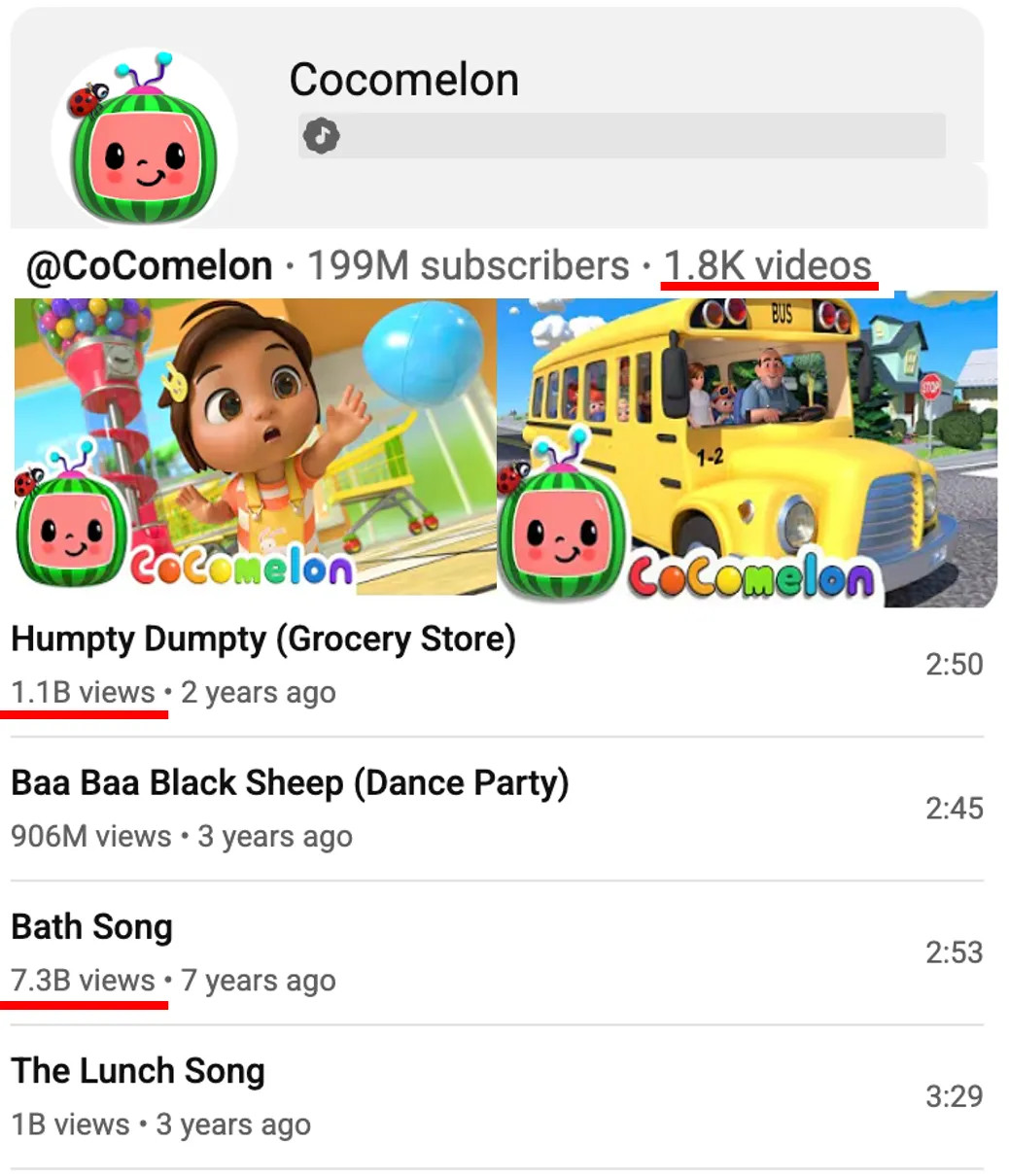
If we take a step back, consider that something many parents trust their children watch was actually designed and optimized to hijack their children regardless of the harm it caused their developing nervous system-and that rather than be penalized for this, it's amassed billions of (lucrative) views because the algorithms content creators follow incentivize this type of quickly produced content.
Living Through Dopamine
I believe many of the problems in our society stem from the fact that the current economic system relies upon people consuming as much as possible. This is problematic, as the only way you can keep getting people to buy things they don't need is by emotionally marketing the products to them. For this reason, the marketing system evolved to have people always have an expectation of future gratification (rather than being content in the present) and to feel miserable until they had it.
Put differently, since these expectations were crafted to trigger addictive dopamine spikes, the society shifted to transforming one's conception of reality from a smooth flow you felt connected and enlivened by to a jolted, disconnected set of spikes where happiness was always fleeting and synthetic rather than real.
Note: I cannot comment on this due to lacking direct experience with them, but many people I've spoken to have analogized this to the difference between taking stimulant drugs (which produce sharp, spiky dopamine releases followed by crashes) and the classic (serotonin mediated) hallucinogens/psychedelics (which create a sustained opening of perception and meaning, often described as a richer, more continuous sense of presence and connectedness that can persist long after the drug is gone).
While many have described the dynamic I am alluding to, what is far less appreciated is that your disposition to one polarity or the other (the hollow dopamine spikes vs. a vivid connection with the present) is greatly influenced by the state of your nervous system. This is because when the nervous system is depleted and fatigued (e.g., from excessive computer use or stress), individuals are far more predisposed to the dopamine spikes as they are much less able to appreciate the subtleties of life (which arguably are where the actual value and content of being alive comes from) and instead can only register strong stimuli (e.g., rough physical contact or strong flavors). Worse still, our society not only continually conditions us to seek the strong dopamine producing stimuli, but also continually depletes and injures our nervous system.
Note: fatigued nervous systems are also less able to maintain sustained long-term attention on something.
In my case, two things made me aware of this:
1. I am quite sensitive to changes within my body (e.g., how differently I perceive things depending on my energy levels—particularly after prolonged periods without sufficient restorative sleep). As technology has evolved, I've also noticed more and more how all electronic media (particularly computers, television, and music) unnaturally influence you and frequently use very similar techniques to induce these dopamine spikes or shift your internal rhythms and emotions while simultaneously disconnecting you from your environment (e.g., I would frequently notice myself getting "amped up" or "pulled in" and then often having a crash where I felt worse once it was withdrawn—at which point I became very concerned I'd invited an external influence into my life which did that to me).
2. When I was in my teens, after learning sugar was bad for you, I tried to quit eating sugar and went through a withdrawal process where some very odd things happened (e.g., I had dreams about accidentally eating sugar, failing, and hence needing to quit my diet)—many of which I learned matched classic withdrawals from an addictive substance (which I found quite disturbing as I'd gone out of my way to avoid all addictive psychoactive substances). Then, once I hadn't eaten sugar for about a month, other than a very distant longing, I no longer had any desire to consume it, and more importantly, noticed that whenever I (essentially accidentally) ate a sugary processed item, rather than enjoying it, my body rejected it as the food was devoid of nourishment.
From this, I made two major conclusions:
•A significant amount of addiction came from the microbiome, as it felt like something else was trying to hijack my mind to make me consume sugar, and because it all suddenly disappeared in a timeframe which potentially coincided with those microbes dying off from starvation.
Note: there is a large body of data showing certain microbes and parasites can create significant psychological effects on their hosts.
•The body has a natural ability to tell if food was good for you, and would reject "bad" or nutritionally deficient food. In turn, since that natural reflex destroys the processed food industry's business model, a solution had to be found, and this was to mix in addictive drugs, which overrode this natural response.
Over the decades, I came across key points of evidence supporting these conclusions. Some of the most poignant (recent) ones included:
•In 2010, David Kessler (a former FDA commissioner) published The End of Overeating: Taking Control of the Insatiable American Appetite, which highlighted that American food has been engineered to be as addictive as possible and that food industry executives had confirmed this to him. There, he highlighted that while Americans were trained to prioritize strong tastes rather than subtle tastes in food, and that foreign chefs find Americans have an extremely unrefined palate and demand fatty-salty-sugary food rather than the rich blend of flavors seen in the traditional ethnic cuisines, and because of this, ethnic cuisines would always be forced to become Americanized (e.g., Chinese food here is vastly different from what it's like in China) or be forced to go out of business.
Note: this point echoes a longstanding frustration of mine, as I've had so many times I found a restaurant I really liked (due to them catering to the complex depth of flavors seen in the traditional cuisine rather than the spikes in Americanized food) which then went out of business (including many cases where I tried to support them and get others to as well).
•I recently learned ( through Calley Means ) that in the 1980s, Big Tobacco bought out the processed food industry and then, as they had done with cigarettes, prioritized making processed foods as addictive as possible (which is documented here).
•Finally, in 2017, another respected author in this field, Robert Lustig MD, seeking to explain the why behind Kessler's 2010 work, published The Hacking of the American Mind: The Science Behind the Corporate Takeover of Our Bodies and Brains. It tied together much of I'd concluded on the issue, revolving around the idea that the brain had a dopamine "temporary pleasure" circuit alongside a serotonin "sustained happiness" circuit. Lustig then argued that a lot of work had gone into shifting us away from serotonin to dopamine circuits and that the addiction to dopamine spikes were used to control every level of society and put us into a constant state of (monetizable) distress, disconnection, and unhappiness (e.g., consider how many issues romantic relationships built around dopamine spikes create).
Note: Lustig's work also highlighted that excessive electronic usage (due to its addictive nature, particularly highly stimulating video games, social media, gambling, or pornography) activates the dopamine circuits, priming children to become more susceptible to junk food cravings. I believe the pornography aspect is particularly tragic as it's made a large number of people switch from being able to enjoy the deep contentment of a visceral and alive connection with another human being to seeking out fleeting dopamine spiking experiences which can only be found in mental fantasies (which pornography caters to), a string of new partners, or extreme sexual activities (a problem which is further compounded by depleted nervous systems being unable to appreciate the subtleties of human contact).
The Forgotten Side of Medicine is a reader-supported publication. To receive new posts and support my work, please consider becoming a free or paid subscriber. To learn more about this newsletter and how others have benefitted from it, click here!
Reconnecting With Life
At this point, I believe the "dopamine" way of living life is a trap most people benefit immensely from being freed from—particularly since, as every drug addict knows, any dopamine spike is always followed by a low that makes you feel even more dead and disconnected inside (along with increasingly strong spikes being required to recreate the joy the initial spike brought).
Unfortunately, extricating oneself from this trap is quite challenging, in part because our society has been designed around the dopamine model, and in part because, when your nervous system has been depleted, it becomes much harder to appreciate the subtler (but far more nourishing) experiences of life. This creates a vicious cycle where nervous system depletion drives one toward dopamine-spiking behaviors, which in turn further deplete and dysregulate the nervous system.
Over the years, I've come to believe the most important things you can do is to restore the health of your nervous system. When the nervous system is healthy and resilient, the pull toward artificial stimulation naturally diminishes, and the capacity to feel alive and connected in ordinary moments returns. In parallel, I think that one of the primary reasons people seek out a variety of spiritual and mind-body or meditative practices is to reclaim this state of being, and the fact that there is an ever growing market for that demonstrates that the depletion of our society is reaching the point people are seeing that can no longer address this depletion by overriding it with more stimulation.
Feeling alive inside is the natural antidote to dopamine addiction; when you genuinely feel alive, the hollow promise of the next spike loses its appeal. So, in the final part of this article (which exists as an open forum for you to ask any unanswered questions which emerged over the last month), I will discuss some of the simpler approaches that we've found most effective for restoring nervous system health and breaking free from the dopamine trap.